Month: January 2014

Couple Donates $70 Million Collection to Philadelphia Museum of Art

“Couple Donates $70 Million Collection to Philadelphia Museum of Art”

by Victor Fiorillo via PhillyMag

“On Thursday, Art Museum CEO Timothy Rub announced that the museum has acquired one of the country’s most important collections of contemporary art from Keith and Katherine Sachs. Keith Sachs, a museum trustee since 1988, is the former CEO of Horsham-based Saxco International, a distributor of wine and liquor bottles.

The collection of 97 works spans the last 60 years and includes pieces by American masters Ellsworth Kelly and Jasper Johns, as well as dozens of other artists. The collection features paintings, both indoor and outdoor sculpture, large-format photography, and video art.

Here’s what Rub had to say:

The Sachs Collection reinforces and expands the scope of the Museum’s holdings of contemporary art and will enable us to present to our audiences a more comprehensive view of the art of the past half century.  . . . .”


“Brian Sewell’s Essential Art Books of 2013”

“Brian Sewell’s Essential Art Books of 2013”

by Brian Sewell via “London Evening Standard

“Is your Raphael authentic? Who was Alan Sorrell? And which British painter-architect deserves to be up there with Palladio? The answers are in this year’s essential art books, chosen and reviewed by Brian Sewell . . . .”

*********************************************************************************************

You can buy his recommended books in the United States here:

Any books you would recommend? Leave the title in the Comments.

My personal favorites revolved mostly around Asian Art, including:

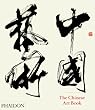
The Chinese Art Book, by Colin Mackenzie, et al. 

Masterpieces of Chinese Painting 700-1900, by Hongxing Zhang.

“Walking Among the Etruscans”

“Walking Among the Etruscans”

by Michael Bleibtreu Neeman via “Epoch Times

“Now disappeared, the Etruscans have left a cultural legacy, which influenced ancient Rome. The Etruscan people, composed of merchants and traders, settled on a fertile land rich in resources; they established their power not by force, but through social and economic means.

In a new exhibition, the Musée Maillol (Maillol Museum) in Paris presents the daily life of the Etruscans, unveiling a cosmopolitan and culturally rich civilization in which women played a role as important as men’s, which is an exception among ancient civilizations.

Because its origins remained an enigma, and has only been known for its funerary culture, the richness of the Etruscan culture was long ignored. However, archaeological excavations of the last few decades reveal new surprising aspects of this mysterious people coming from the Middle East.

The Maillol Museum traces the history of the Etruscans from their settlement in the Italian Peninsula in the ninth century B.C. with 250 objects coming from European museums and institutions, in particular from those in Italy. . . . .”


“Flea Market Renoir Painting Sparks Legal Battle With Museum”

“Flea Market Renoir Painting Sparks Legal Battle With Museum”

via “ABC NEWS

“A one-of-a-kind Renoir painting the size of a napkin is at the center of an intense legal battle between a museum that claims it was stolen and a Virginia woman who claims she bought it for $7.

The tiny work of art is an 1879 landscape by the Impressionist painter titled “Paysage Bords de Seine.”

In court papers filed this week, the Baltimore Museum of Art claims the painting was stolen in 1951. As evidence, the Museum provided a 60-year-old police report, old museum catalogues and a receipt showing that a patron bequeathed the painting to the museum. . . . .”

‘Degenerate Art’ Opens at Neue Galerie in the Spring

‘Degenerate Art’ Opens at Neue Galerie in the Spring

by Carol Vogel via “NY Times”

The Neue Galerie’s big spring show, “Degenerate Art: The Attack on Modern Art in Nazi Germany, 1937,” has been nearly three years in the making, yet it seems particularly prescient after the discovery last month of what may well be the biggest trove of missing 20th-century European art — about 1,400 works suspected of being traded or looted during the Nazis’ reign, including paintings by Matisse, Chagall, Renoir, Toulouse-Lautrec, Picasso and a host of other masters. Some disappeared in the late 1930s, around the time the Nazis raided German museums and public collections, confiscating works they called degenerate because Hitler deemed them un-German or Jewish in nature. . . .

This would be interesting to catch; I’m surprised so many works survived, since the Nazis destroyed so much of what they disapproved of (the loss in literary history was devastating).  It is a relief to know that so much survived, and I would be fascinated to attend this showing.  If anyone has a chance to go, a review would be greatly appreciated!