Month: October 2014

25 Contemporary Chinese Artists You Need to Know

“25 Contemporary Chinese Artists You Need to Know”

by Emily Carr via “Complex


How do you select 25 individuals from a nation of 1.3 billion people? Arbitrarily is the only real answer. Though by no means exhaustive, the following list represents a cross section of artists that currently live and work in China and make really cool art.

China is at once a uniquely contemporary and deeply traditional society. Chinese social and political life is based largely on events of the last forty years, since the end of the Cultural Revolution in 1976 forced a hard reset. The institution of the one-child policy in 1979, the Tiananmen Square protests of 1989, the exponential economic growth in the ’90s, the country’s admission into the World Trade Organization in 2001, the recent period of rapid Westernization, and the rise to global power have shaped every aspect of Chinese life.

Meanwhile, centuries-old artistic traditions, such as ink-wash painting and ceramics, remain dear and deeply ingrained in the culture. Ranging in age from those in their 20s to those in their 50s, the artists that follow are all affected and influenced by the country’s recent events and ancient artifacts. From the ultra famous to the super fresh, they deal with the constantly shifting current of Chinese society, politics, and economy, while maintaining a connection to the country’s deep cultural roots.

From old to young, here are 25 Contemporary Chinese Artists You Need to Know.  . . .

Hua Tunan

Medium: Painting, Illustration

Based in: Foshan

At just 22 years old, Chen Yingie AKA Hua Tunan already possesses masterful skill and sage understanding of artistic tradition. He draws on classical styles and methods using modern media like spray paint and his signature “ink splatter” and paper cuts. His striking compositions often feature natural subjects, particularly animals, and with nimble technique and a bold sense of color.


Xu Bing

Medium: Installation

Based in: Beijing

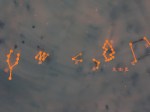
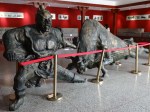
Xu Bing has been a major player in Chinese art for over 30 years. He creates extremely complex, systematic projects that often become large-scale, attention-grabbing installations. In 1987, he developed a vocabulary of 4,000 symbols that appear like Chinese characters but have absolutely no meaning in any language. He carved each into a wooden block and hand-printed them into a series of nonsense volumes, known as Book from the Sky. He later tattooed a pig with his made-up characters and put it in a pen with another pig inked with nonsense words in the English alphabet; the piece became notorious when the two pigs started going at it in the exhibition. Xu has also invented and even taught classes in Square Word Calligraphy, a method of writing English words in a script that looks like Chinese characters. His recent work has focused on non-linguistic matters, as the aptly-named Phoenix above, which was created from the demolition debris and materials found on Chinese construction sites.

READ MORE


A Family Battles Over a Disappearing Trove of Chinese Paintings

“A Family Battles Over a Disappearing Trove of Chinese Paintings”

By Graham Bowley via “New York Times

It has evolved into one of New York’s longest-running fights over an estate.

For more than a decade, the family of C. C. Wang, a collector whose name graces a gallery at the Metropolitan Museum of Art, has been battling over a trove of classical Chinese paintings and scrolls that has been described as among the finest in the world.

Now, the feud has escalated. In the past month, two of Mr. Wang’s children, who have been fighting in Surrogate’s Court in Manhattan since his death in 2003 at 96, filed lawsuits in state and federal courts accusing each other of looting and deceit.

But beyond the family strife, a broader issue is dismaying Chinese-art experts for whom the Wang collection has long been a source of wonder.

Dozens, perhaps hundreds, of works from an estate once valued in court papers at more than $60 million have gone missing, including an 11th-century scroll, “The Procession of Taoist Immortals,” that is viewed in China as a national treasure.

“This is heartbreaking, and it is happening right here in the city,” said Laura B. Whitman, a specialist in Chinese art formerly with Sotheby’s and Christie’s, who used to visit Mr. Wang at his apartment in New York to view his collection.

Divining who rightfully owns these works, and who is to blame for the disappearance of so many of them, has consumed the family for more than a decade.

The case has become so complex, and so expensive, that the Surrogate’s Court has suspended discussing matters of inheritance until it can come up with a reliable inventory of what was initially in the collection to see if the estate will be able to pay lawyers and other creditors.

Among the few certainties at this point is that Mr. Wang demonstrated the ability to acquire objects of historical importance, objects that since his death have increased many times in value as the Chinese art market has boomed.

Born near Suzhou, China, in 1907, he moved to the United States during China’s political upheavals in 1949, settling in Manhattan, where he built a career teaching, consulting at Sotheby’s, and dealing in real estate and in art. He became the dean of the rarefied market for Chinese art in New York and was an accomplished artist in his own right. By the end of the 1990s, the Met had bought some 60 works that were once part of his collection and named a gallery in his honor.

Among the Met acquisitions was a colossal hanging scroll titled “Riverbank,” attributed to the 10th-century painter Dong Yuan, but which attracted its own controversy after some scholars declared it a 20th-century forgery.

Maxwell K. Hearn, chairman of the Met’s Asian art department, said Mr. Wang acquired much of his important collection early on, when the market for Chinese art didn’t exist.

“He saw their continued relevance as sources of artistic inspiration,” Mr. Hearn said. “Now, they have become enormously valuable, because people are recognizing their cultural significance and acknowledge him as a source of validation.”

Before his death, Mr. Wang left some works to his daughter Yien-Koo Wang King, now 79, and some to his son, Shou-Kung Wang, now 85, both of whom served during different periods as confidant and business agent to their father.

READ MORE

Art I Love ~ “The Green Parasol”

“The Green Parasol” by Emanuel Phillips Fox (1912)

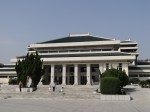
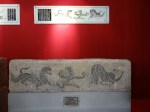
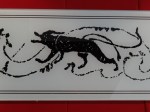
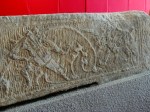
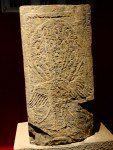
Nanyang Museum of Han Stone Gravings, Henan, China

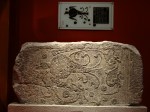
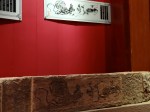
Recently, I traveled abroad with about 20 other teachers to Southern Henan during the Fall Holiday.  We hired a tour guide to arrange our trip, and one of the places on his list was the Nanyang Museum of Han Stone Gravings. 

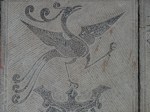
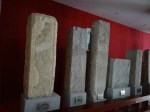
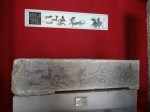
This was a really fascinating place. The museum holds hundreds of stones engraved with various pictures and images collected from ancient Han tombs. We were told that they were more than 1000 years old!

I was intrigued by the carvings themselves. Naturally, they varied on the subject of their work – dinners, hunting, musicians, kings and counsels. It’s always neat to see art demonstrating the use of ancient musical instruments or to watch fashions change as the years go by. But I was really interested to see some of the animals are actually pre-historic. One was clearly a dinosaur (you know the kind that is Sarah on The Land Before Time?). Two were dragons, but only one had wings.

You kind of expect the dragons, but the differences in how they were depicted suggests two origins to the dragon legend. One was wingless and quite fat. The other had wings and was longer and thinner. Add in the dinosaur, and it was all really cool!


Islamic State Raids Biblical City of Ninevah, Sells Ancient Treasures For Millions

Islamic State Raids Biblical City of Ninevah, Sells Ancient Treasures For Millions

by Thomas D. Williams via “Breitbart

The sale of archaeological treasures from the Biblical city of Nineveh and the surrounding territory is becoming one of the main sources of funding of the Islamic State in Kurdistan as well as in Syria, according to reports by the Italian newspaper Corriere della Sera.

A USB stick recovered from an Islamic State militant by Iraqi intelligence in August documents the value of revenues on the black market at $32 million. Among the items for sale: hundreds of headstones, inscriptions, mosaics, and adornments.

According to Qais Hussein Rasheed, head of the state-run Museums Department in Iraq, black market dealers are entering areas under Islamic State control to buy these items.

In their zeal to destroy what they consider to be heresy, Islamic State militants have demolished many artifacts but they are cashing in at the same time, extracting valuable relics to sell on the international black market.

Profiting from religious artifacts represents a curious double game. On the one hand, the precepts of Wahhabism, a fundamentalist Islamic sect, require the destruction of every object of worship not directed to Allah. This has justified the demolition of churches, mosques, and tombs, and has been carried out with maximum media exposure.

On the other hand—this time without advertising it—the same IS leaders are now either selling artifacts directly or granting access to occupied archeological zones to teams of professional looters. They then split the revenues from the plunder according to the Islamic law of Khums: a fifth of the spoils must be paid to God, ie, the Islamic state.

The Turkish border is only a few hours away with Western brokers waiting to transfer the artifacts to the major black art markets: London, New York, and Tokyo. . . . .

READ MORE