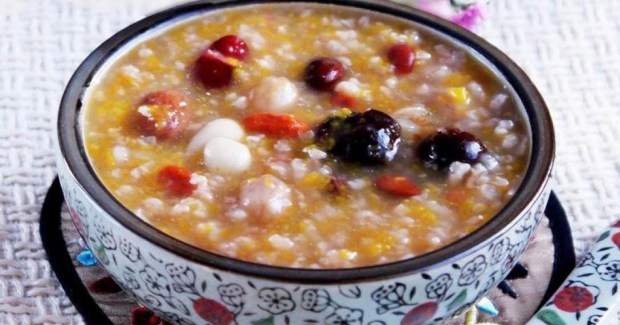
Here in Dongbei (Northeast China), my students are all wishing each other Laba Day greetings and reminding each other to eat porridge. The porridge they are talking about is sometimes called Laba Congee instead. There are different variations; for example, some have lotus seeds and others have peas, fruit or nuts in it. Some have all kinds of stuff mixed together. Apparently some areas of China have meat or tofu in it, and some vegetables, because my friend posted a picture of that kind.
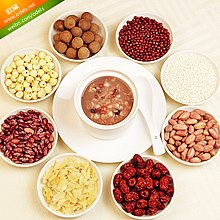
Because it is the 8th day, the Chinese like to add in 8 ingredients to make the porridge (I love China and their love of numbers). So they boil it like normal porridge, with maybe some extra sugar to sweeten it. It takes several hours to make, especially the beans which have to soak.
The first bowl is offered to the ancestors (for those who still honor them — it’s not quite as common here in China anymore, but the thought is there). Then some can be sent to neighbors or friends, grandparents, etc. Then the family eats the remainder together. Hopefully, you have plenty! If there is some left over, it means next year will be bountiful! (Remember this is still a harvest festival).
Apparently in some of the old times, the businessmen and government officials would give it to the employees on Laba Festival as a treat, but it’s history goes even further back than that. Some say it was originally served only to the ancestors during the Hong dynasty and later became more commonly served in the Song dynasty. A few say that it is made in remembrance of an emperor who grew up poor eating only congee and later asked everyone in the empire to eat it once a year to remember their origins. Whatever the origins, Laba porridge has been part of the festival since the Song Dynasty (960-1279 AD).
Some people will also make Laba Garlic as well. A couple students I know have posted pictures of the process on their WeChat. They peel the garlic and add it to a jar. Then they fill the jar up with rice vinegar and sugar. Eventually it turns GREEN! They’ll keep it until the Spring Festival when they eat it for the holiday.




 The Cultured Muse