Art & Cultural History

Cambodia’s Angkor artifacts to be exhibited in China

Cambodia’s Angkor artifacts to be exhibited in China

via “China Daily”

Eighty masterpieces from Cambodia’s renowned Angkor Wat Temple will be displayed in China for six months, aiming at promoting cultural ties between the two countries.

Cambodian Minister of Culture and Fine Arts Phoeurng Sackona and Liu Shuguang, director general of the Chinese Academy of Cultural Heritage, signed an agreement on the ancient artifacts lease on Tuesday with the presence of Chinese Ambassador to Cambodia Bu Jianguo.

According to a press statement after the signing ceremony, Chinese Academy of Cultural Heritage, Beijing Huaxie Cultural Development Company and Capital Museum China will co-organize the exhibition, to be commenced in Capital Museum China in Beijing from December 26, 2014 for three months, afterwards in Guangdong Provincial Museum from April to late June in 2015.

The complete 80 pieces of historical relics are borrowed from the National Museum of Cambodia.

“As the first ever showing exhibition from Cambodia in China, this event is bound to open a new chapter of cultural exchange between the two countries,” the statement said.

“It will provide a unique platform of reflection towards history, civilization, religious feature and arts achievement of Angkor period in Cambodia.”

Phoeurng Sackona said the exhibition will be a unique chance to enhance friendship and cultural ties between Cambodia and China.

“We hope that the exhibition will help promote Cambodian culture to both Chinese and foreigners in China,” she told reporters.

“I also hope that through the event, more Chinese tourists will visit Cambodia’s Angkor Wat Temple, a world heritage site.” . . . .

READ ORIGINAL

“Sino-France Cultural Exchange In Beijing”

Shared in honor of the exhibition recently held in Paris ~ “The Villa of Dr. Jean Bussiere (1872-1960), a French Doctor in Beijing.”**DB

“Sino-France Cultural Exchange In Beijing”

by Vanisa Wei via “iDigest”

From the beginning of 1900s to 1930s, there were a number cultural exchanges between China and France in the northern part of Xishan (the Western Hills), in the Haidian District of northwest Beijing. If the Haidian District Government can take full advantage of the history in that area and make scientific planning to develop the available resources, it will not only improve the local economy but raise the brand awareness of that area.

Important Historical Figures


Andre d’Hormon (1881-1964)

D’Hormon, with another two Chinese educators Cai Yuanpei and Li Shizeng, initiated a work-study program for Chinese students studying in France around 1920. He also persuaded the French Government of the times to establish the Sino-French University and its affiliated institutions in Beijing. These facilities can provide language and other trainings for students prior to going to France. Through this program, a number of important figures in Chinese history, first Premier of the PRC Zhou Enlai and major reformist Deng Xiaoping among them, were fostered. .

At that time, d’Hormon was a professor at Peking University. During his tenure, who should be a librarian in the Peking University Library but Mao Zedong, later the first president of the People’s Republic of China. Whenever d’Hormon needed to borrow a book from the library, Mao would deliver the book to the professor in person, according to the Brochure of Sino-France Cultural Exchange in Beijing by Publicity Department of Beijing Haidian District Committee of the Communist Party of China.

D’Hormon lived in Beijing for 48 years, returning to France in 1954. He used his last 10 years to proofread the French edition of A Dream of Red Mansions, translated by Li Zhihua, a graduate from the Sino-French University. It should be noted that d’Hormon translated some of the poems from A Dream of Red Mansions in a style of ancient French poetry based on the Chinese poems original meaningsso that French readers might better understand the Chinese classic. The French edition of A Dream of Red Mansions was published posthumously and was well received by French readers.

D’Hormon remained a bachelor all his life and left behind no children. He spent almost half of his life in China and devoted the rest of that life towards researching Chinese culture after he returned to France.


Dr. Jean Bussiere (1872-1960)

Dr. Jean Bussiere came to China in 1912 and worked as a physician in Beijing’s French Legation Office . Later, Bussiere worked as the campus doctor at Yenching University in Beijing. When the Sino-French University was founded, Bussiere acted as the chief executive director.

Dr. Bussiere spent much of his life in the Xi Shan areaof Beijing. With superior knowledge regarding medicine, many nearby villagers visited the doctor seeking treatment for various maladies. Much of the time, Dr. Bussiere treated them for free., making him a popular figure in the area..

Bussiere was a key figure within the circle of French expatriates living in China. The living room of Xi Shan villa was an important place for Beijing’s French population to congregate. He accompanied the French poet-diplomat and Nobel Prize winner Saint-John Perse on his travels through north China to help the latter know more about China.  . . .

READ MORE

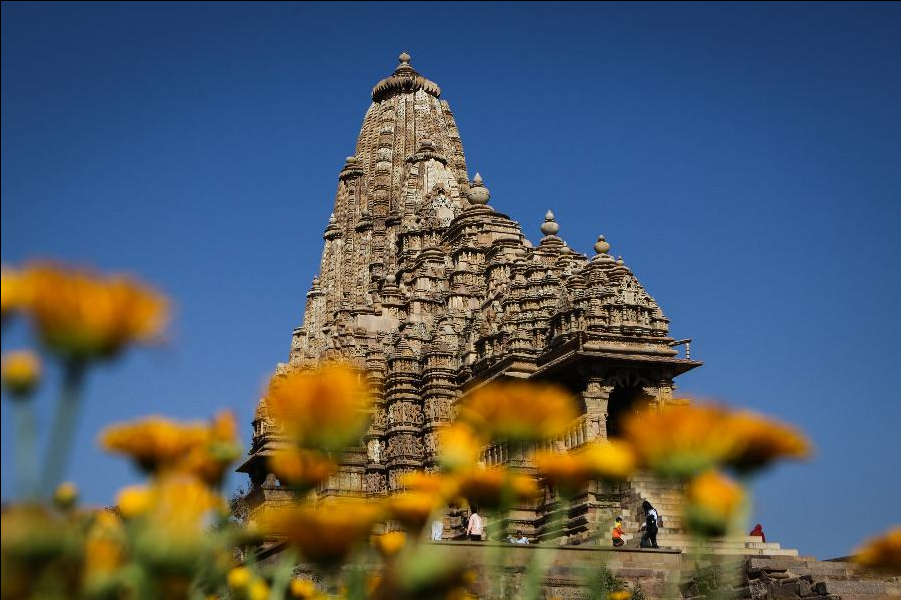
World Cultural Heritage: Khajuraho Group of Monuments in India

“World Cultural Heritage: Khajuraho Group of Monuments in India”

by Yamei Wang via “Xinhuanet”

Photo

SEE MORE PHOTOS

Arrests over 18th Century icon theft from Chester Cathedral

Arrests over 18th Century icon theft from Chester Cathedral

via “BBC

The artwork seized by police

Five people have been arrested over the theft of an 18th Century piece of religious art from Chester Cathedral.

Police discovered the Greek Orthodox icon “The raising of Lazarus”, which was stolen in August, at a property in Edleston Road, Crewe, on Wednesday.

Officers also seized other artworks at the property and said they were trying to identify where they have come from.

Four men aged between 31 and 59 and a 57-year-old woman are being questioned over the theft.

The icon was gifted to the cathedral by the late Dean Ingram Cleasby’s family.

Vice Dean, Canon Peter Howell-Jones said it was taken from the altar of the Chapel of Saint Anselm and a small Christmas tree decoration of an angel was left in its place. .. . .

READ ORIGINAL

Chicago Tops the World’s Best Museum List – Guess Who Else Made the Cut?

“Chicago Tops the World’s Best Museum List – Guess Who Else Made the Cut?”

by Greg Keraghosian via “Yahoo News

Chicago Tops the World’s Best Museum List – Guess Who Else Made the Cut?

The Art Institute of Chicago was founded in 1879, but it still must be winning visitors over, because for the second straight year it was named the most-liked museum in the U.S. in TripAdvisor’s Travelers’ Choice awards. This year, it was also named the world’s favorite.

The Getty Center of Los Angeles also drew high marks as the second-favorite museum in the U.S. and fourth favorite in the world.

TripAdvisor bases the awards on millions of reviews and opinions from their members, spread out over 12 months. The site says it uses an algorithm that measures the quantity and quality of reviews to determine the winners

The Art Institute rose from No. 3 in the world last year to No. 1 this year. It has 300,000 pieces of art from the likes of Vincent van Gogh, Paul Gauguin, Claude Monet, Rembrant, and many other famous artists. Among the most famous works is “American Gothic,” that famous 1930 farmer/pitchfork painting by Grant Wood. . . . .

READ MORE