1800s

Coming Exhibition: Inventing Impressionism

“Inventing Impressionism”

Who:  National Gallery (London)

When: Mar. 4, 2015 – May. 31, 2015 (View Hours Here)

Where: 

National Gallery
Trafalgar Square
London, UK

How Much:  (View Pricing Here)

More Information: Here

“So universally popular are the Impressionists today, it’s hard to imagine a time when they weren’t. But in the early 1870s they struggled to be accepted. Shunned by the art establishment, they were even lambasted as ‘lunatics’ by one critic.

One man, however, recognised their worth from the beginning. Paul Durand-Ruel, an entrepreneurial art dealer from Paris, discovered this group of young artists – including Monet, Degas, Manet, Renoir, Pissarro and Sisley – and gambled.

Realising the fashionable potential of their derided ‘impressions’ of urban and suburban life, Durand-Ruel dedicated the rest of his life to building an audience for their work – creating the modern art market in the process.

Such was his perseverance, Durand-Ruel nearly bankrupted himself twice, before successfully globalising his operation with outposts in London, Brussels and New York, and establishing the one-man show as the international norm for exhibitions.

The ‘Impressionists’ – a term first used derogatively by critics – was to become the household name that stands today.

‘Inventing Impressionism’ features 85 masterpieces from the movement, all but one having passed through Durand-Ruel’s hands, including three of Renoir’s famous ‘Dances’ and five from Monet’s ‘Poplars’ series.

The man who returned his grandfather’s looted art

“The man who returned his grandfather’s looted art”

by Ellen Otzen via “BBC News

Captain Walker, seated, on the right, in Benin City after British troops looted the palace

At the end of the 19th Century British troops looted thousands of works of art from the Benin Empire – in modern-day Nigeria – and brought them home. One soldier’s grandson inherited two bronzes but recently returned them to their original home.

“It’s an image that’s deeply ingrained in my memory. The dead body seemed unreal. It’s not a picture you can easily forget,” says Mark Walker.

He was 12 years old when he first saw his grandfather’s diary – the photographs inside made a deep impression.

“They were very faded, but perhaps the most shocking one for me was a partly dried-up body being held up by two men on a pole.

“Clearly the people lifting the body didn’t actually want to touch it and that seemed to me to capture the feeling my grandfather also had about them. It was something so horrible you wanted to keep it at arm’s length,” says Mark.

The pictures were taken by his grandfather, Capt Herbert Walker, in West Africa in 1897.

The two Walkers never met – Herbert died in 1932, 15 years before his grandson was born and Mark’s grandmother showed him the journal, titled To Benin and back, while he was staying with her in 1959.

The diary cover

The Benin Kingdom, which is now part of Nigeria, had a wealth of natural resources including ivory, palm oil and rubber which the UK was keen to control.

Mark Walker spoke to Witness on BBC World Service Radio

But in January 1897, seven British officials who were on their way to see the Oba of Benin – the king – were killed in an ambush.

The Times of London reported that the men “on quite a peaceful mission” had been “massacred by the King’s people”.

Map of Nigeria showing location of Benin City

It is unclear who, if anyone, ordered the killings and there are indications that the mission was not as peaceful as the British press described it. Although its leader, acting Consul-General James Phillips had sent a message to the Oba asking to discuss trade and peace, he had told London he wanted to depose him.

READ MORE

“More than 100 relics from Yuanmingyuan displayed”

This is where my specialty lies! It’s really amazing to see these on exhibition in China again.**DB

“More than 100 relics from Yuanmingyuan displayed”

via “China Daily

More than 100 relics from Yuanmingyuan displayed

A vase is on display during an exhibition of treasures of the Yuanmingyuan at the Shandong Provincial Museum in Jinan, capital of east China’s Shandong province, Jan 9, 2015. Bronze heads of cow, tiger, monkey and pig, and more than 100 relics from the Yuanmingyuan were on display in the exhibition.

(more…)

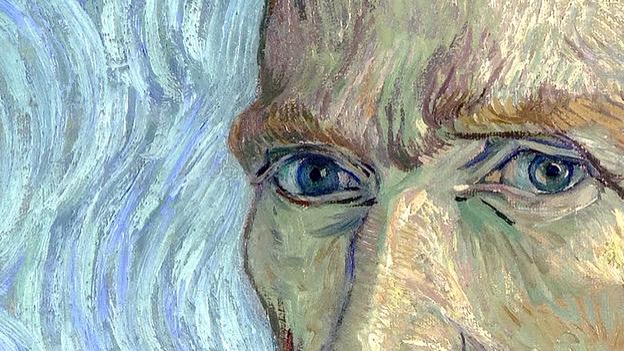
Van Gogh and the decision that changed art history

Van Gogh and the decision that changed art history By Alastair Sooke via BBC Culture

Self-Portrait by Vincent van Gogh
STATE OF THE ART| 27 January 2015
Van Gogh and the decision that changed art history
Alastair Sooke
Art Art history Exhibition
Share this page
(Corbis)
(Corbis)

In 1878 Van Gogh was a struggling would-be preacher. At his lowest ebb, he began to draw. Alastair Sooke looks back at this pivotal moment in history.

In the spring of 1878, Vincent van Gogh turned 25. As he looked back over his short life, the Dutchman found little to celebrate among the meagre endeavours of his faltering career. By conventional, middle-class standards, he was a failure.

A stint working for an art dealership first in The Hague then in London and Paris hadn’t worked out: shy and awkward, he didn’t take to the profession, and in 1876, he was fired. That was followed by a couple of dead-end teaching jobs in England, as well as a short, forgettable spell working in a bookshop in Dordrecht, before he moved to Amsterdam to become a minister of religion, following in his father’s footsteps.

However, he didn’t have the patience or rigour to master the necessary study, so in 1878 – a few months after his 25th birthday – he left for Brussels, in order to enrol in a swifter training school for evangelists. Even this, though, was beyond him. After a three-month trial period in which his performance was less than mediocre, he was told that he would not be admitted to the course.

By now, Van Gogh’s family was beginning to despair. He had not curbed his socially inept and awkward manner, which was exacerbated by an eccentric tendency to dress in a deliberately unkempt fashion. How could an oddball like Vincent ever hope to scrape a living? His father was beginning to wonder whether his eldest son should be admitted to a mental hospital.

Van Gogh, though, was still fired with religious zeal and remained adamant that he could find work as an evangelist. At the end of 1878, he set off for the depressed coalmining district of the Borinage to the west of the city of Mons in Belgium, determined to establish himself as a lay preacher to the working

As a new exhibition, Van Gogh in the Borinage, at BAM (Beaux-Arts Mons) documents, he stayed in the region until October 1880, when he returned to Brussels. (Mons is one of the European capitals of culture for 2015.) Although ultimately his ambitions to become an evangelist would be thwarted – things got so bad that at one point his sister suggested that he should re-train as a baker – the Borinage was the making of Van Gogh in one fundamental respect. It was here, encouraged by his gentle brother Theo, that he decided to become an artist.

The startling thing is that his experiences in the Borinage seem to have set the template for many subjects and motifs that would continue to fascinate him as an artist over the next decade, until his death from a self-inflicted gunshot wound to the chest in the summer of 1890.

True to form, life for Van Gogh in the Borinage was not straightforward. He lived in a humble hut, gave away much of his money, and swapped his smart clothes for the practical work-wear of the ‘Borins’. Unfortunately, he was not a gifted orator, so his meetings were sparsely attended. His inability to connect with the local coalminers was compounded by a practical, linguistic difficulty: he couldn’t make head or tail of their quick-fire patois known as ‘Walloon French’, while they were mystified by his own attempts at French, which to their ears sounded overly formal and fussy. In July 1879, only half a year after he had arrived in the region, he received another setback: the authorities terminated his trial appointment as an evangelist, precipitating a crisis of self-doubt.

Read More

Art I Love: Sensoji Temple

"Sensoji Temple in Edo" (1809)

“Sensoji Temple in Edo” (1809)