Art

Man Buys 10.000 Undeveloped Negatives At a Local Auction and Discovers One of The Most Important Street Photographers of the Mid 20th Century

“Man Buys 10.000 Undeveloped Negatives At a Local Auction and Discovers One of The Most Important Street Photographers of the Mid 20th Century”

by Vivian Maier via “Weburger

Imagine this : perhaps the most important street photographer of the twentieth century was a nanny who kept everything to herself. Nobody had ever seen her work and she was a complete unknown until the time of her death. For decades Vivian’s work hid in the shadows until decades later (in 2007), historical hobbyist John Maloof bought a box full of never developed negatives at a local auction for $380.

street photography 001

John began to develop the negatives and it didn’t take long before he realised that these were no ordinary street snapshots from the 50’s and 60’s — these pictures were a lot more then that. Maier’s work is particularly evocative for those who grew up in the 50′s and 60′s because she seemed to stare deep into the soul of the time and preserve the everyday experience of the people. She ventured outside the comfortable homes and picturesque residential neighborhoods of her employers to document all segments of life in and around the big city.

vivian maier 1-10
1953. New York, NY

street photography 002

street photography 003

street photography 004

READ MORE

What the Sumerians did for art

“What the Sumerians did for art”

by P.W. via “The Economist

GOLD-encrusted and splendid, Tutankhamun’s tomb changed perceptions of archaeology in Europe and the United States on its discovery by Howard Carter in 1922, and the resulting wave of Egyptomania influenced everything from fashion to furniture. “From Ancient to Modern: Archaeology and Aesthetics”, a new exhibition at the Institute for the Study of the Ancient World (ISAW) in New York, explores the impact that the Tutankhamun hoard had on two near contemporaries of Carter, Leonard Woolley and Henri Frankfort, who worked on separate digs in what is now southern Iraq—as well as the public response to their finds.

The pieces that the English Woolley and the Dutch Frankfort uncovered were from the Sumerian civilisation (c.3100BC-2100BC) and helped change the public perception of ancient societies and artefacts. They included jewels and luxury goods at Ur (Woolley) and dozens of stone carvings from the nearby Diyala Valley (Frankfort).

Woolley’s team struck gold, literally and metaphorically, in 1927. A large cemetery was uncovered with 1,800 graves, including 16 that were said to be royal tombs, since they contained bodies ornamented with precious materials. The remains of Queen Puabi, buried with a retinue of murdered servants to ensure her care in the afterlife, became Woolley’s Tutankhamun. Her elaborate gold headdress, topped by a spectacular star-studded comb, was reconstructed by Woolley’s wife, as was the queen’s cloak of long strands of semiprecious stones. An imagined facsimile of the queen wearing this garb was soon on display at the British Museum.

The stone figures (pictured) found by Frankfort’s mission, which started work in 1930, depict men with huge eyes and bare chests. Their long skirts seem to have been made of feathers or leaves, though scholars now say the material was cotton tufts. From the first Frankfort referred to them as sculptures not artefacts. For him, as for thousands after, they were works of art.

Following Carter’s example, the two archaeologists sought to ensure maximum publicity for their finds, and were rewarded with some lurid news stories. “Evidence that the Queen of Ancient Ur was clubbed to Death,” screamed a 1928 piece in the Washington Herald. “Grim Tragedy of Wicked Queen Shubad’s 100 Poisoned Slaves,” ran a 1934 account in thePhiladelphia Inquirer. Agatha Christie’s 1935 mystery, “Murder in Mesopotamia”, was inspired by Woolley’s dig.

ISAW’s fascinating, tightly packed show has many jewels and ten of the stone figures, as well as contemporary archaeological records with detailed drawings and measurements, on-the-spot diaries and photographs of the teams. In a second room are works by 20th- and 21st-century artists who saw the stone carvings, among them Henry Moore and Alberto Giacometti. But this display, while attractive, is unpersuasive: an artist can see an object, even be captivated by it, without it having a lasting influence; yet such an influence is claimed. While the drawings Giacometti made in 1935 from Sumerian sculpture on view at the Louvre are of some interest, it was Etruscan art that more powerfully influenced his work. As for the cast-concrete Moore figure from 1929 that is on display, the fact that the work’s folded hands may owe something to the Sumerian statues does nothing to support the idea that Moore’s subsequent more celebrated sculpture was similarly influenced.

READ MORE

Sotheby’s Brushes Up Its Image With London Auction

“Sotheby’s Brushes Up Its Image With London Auction”

by Mary Lane via “WSJ

The sale of Gerhard Richter's ’Abstract Picture, 599’ for $46 million set an auction record for the German artist.

LONDON— Sotheby’s shook off doubts stemming from the ouster of its chief executive late last year, earning this past week its highest total for artwork auctioned in London from its contemporary art department.

The company’s annual February auction Tuesday totaled $188 million, representing a 31% increase from 2014’s February sale.

In November, William Ruprecht stepped down as Sotheby’s CEO, following a monthslong campaign by hedge-fund activist Dan Loeb to shake up the company’s management. Mr. Ruprecht’s handling of the contemporary art division was a focus of criticism.

On Friday, Sotheby’s said it wouldn’t be paying a special dividend initiated last year, saying it wanted to preserve “flexibility” in its “capital allocation” while searching for a new chief executive.

Tuesday’s auction result, within Sotheby’s $136 million to $193 million pre-sale estimate, helped the publicly traded auction house beat privately owned nemesis Christie’s, which sold $178 million worth of art on Wednesday, down 16% from a year earlier.

Asian and Middle Eastern participation in Sotheby’s evening session on Tuesday was low, with only 9% of buyers from that region. But South American participation doubled from last year, with 37% of buyers coming from South and North America combined. At Christie’s, about a fifth of buyers were from Asia and the Middle East, with Europe and North America accounting for about half.

The week’s biggest art sale was Gerhard Richter’s 1986 painting “Abstract Picture, 599.” It sold over the phone to Ken Griffin, founder of investment fund Citadel, at Sotheby’s for $46 million, according to people familiar with the matter. The purchase was highly unusual for the billionaire, better known for collecting more mainstream artwork, including Impressionists. Mr. Griffin broke the previous Richter record of $37 million set by Sotheby’s in May 2013. The 118-inch by 99-inch work, featuring a metallic-looking paint that glistens, drew its second-highest bid from a private collector working through Gallus Pesendorfer, a Cologne-based specialist who typically works with German buyers.

READ MORE

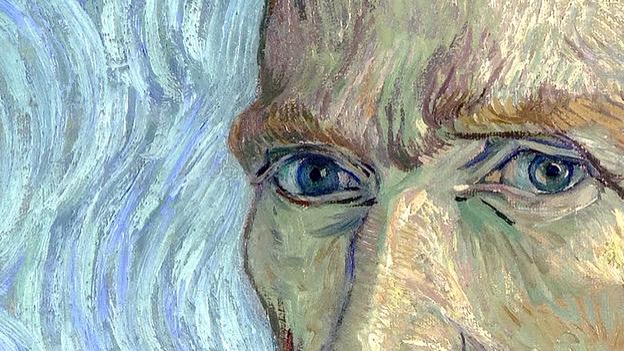
Van Gogh and the decision that changed art history

Van Gogh and the decision that changed art history By Alastair Sooke via BBC Culture

Self-Portrait by Vincent van Gogh
STATE OF THE ART| 27 January 2015
Van Gogh and the decision that changed art history
Alastair Sooke
Art Art history Exhibition
Share this page
(Corbis)
(Corbis)

In 1878 Van Gogh was a struggling would-be preacher. At his lowest ebb, he began to draw. Alastair Sooke looks back at this pivotal moment in history.

In the spring of 1878, Vincent van Gogh turned 25. As he looked back over his short life, the Dutchman found little to celebrate among the meagre endeavours of his faltering career. By conventional, middle-class standards, he was a failure.

A stint working for an art dealership first in The Hague then in London and Paris hadn’t worked out: shy and awkward, he didn’t take to the profession, and in 1876, he was fired. That was followed by a couple of dead-end teaching jobs in England, as well as a short, forgettable spell working in a bookshop in Dordrecht, before he moved to Amsterdam to become a minister of religion, following in his father’s footsteps.

However, he didn’t have the patience or rigour to master the necessary study, so in 1878 – a few months after his 25th birthday – he left for Brussels, in order to enrol in a swifter training school for evangelists. Even this, though, was beyond him. After a three-month trial period in which his performance was less than mediocre, he was told that he would not be admitted to the course.

By now, Van Gogh’s family was beginning to despair. He had not curbed his socially inept and awkward manner, which was exacerbated by an eccentric tendency to dress in a deliberately unkempt fashion. How could an oddball like Vincent ever hope to scrape a living? His father was beginning to wonder whether his eldest son should be admitted to a mental hospital.

Van Gogh, though, was still fired with religious zeal and remained adamant that he could find work as an evangelist. At the end of 1878, he set off for the depressed coalmining district of the Borinage to the west of the city of Mons in Belgium, determined to establish himself as a lay preacher to the working

As a new exhibition, Van Gogh in the Borinage, at BAM (Beaux-Arts Mons) documents, he stayed in the region until October 1880, when he returned to Brussels. (Mons is one of the European capitals of culture for 2015.) Although ultimately his ambitions to become an evangelist would be thwarted – things got so bad that at one point his sister suggested that he should re-train as a baker – the Borinage was the making of Van Gogh in one fundamental respect. It was here, encouraged by his gentle brother Theo, that he decided to become an artist.

The startling thing is that his experiences in the Borinage seem to have set the template for many subjects and motifs that would continue to fascinate him as an artist over the next decade, until his death from a self-inflicted gunshot wound to the chest in the summer of 1890.

True to form, life for Van Gogh in the Borinage was not straightforward. He lived in a humble hut, gave away much of his money, and swapped his smart clothes for the practical work-wear of the ‘Borins’. Unfortunately, he was not a gifted orator, so his meetings were sparsely attended. His inability to connect with the local coalminers was compounded by a practical, linguistic difficulty: he couldn’t make head or tail of their quick-fire patois known as ‘Walloon French’, while they were mystified by his own attempts at French, which to their ears sounded overly formal and fussy. In July 1879, only half a year after he had arrived in the region, he received another setback: the authorities terminated his trial appointment as an evangelist, precipitating a crisis of self-doubt.

Read More

Art I Love: Sensoji Temple

"Sensoji Temple in Edo" (1809)

“Sensoji Temple in Edo” (1809)