China

“Sino-France Cultural Exchange In Beijing”

Shared in honor of the exhibition recently held in Paris ~ “The Villa of Dr. Jean Bussiere (1872-1960), a French Doctor in Beijing.”**DB

“Sino-France Cultural Exchange In Beijing”

by Vanisa Wei via “iDigest”

From the beginning of 1900s to 1930s, there were a number cultural exchanges between China and France in the northern part of Xishan (the Western Hills), in the Haidian District of northwest Beijing. If the Haidian District Government can take full advantage of the history in that area and make scientific planning to develop the available resources, it will not only improve the local economy but raise the brand awareness of that area.

Important Historical Figures


Andre d’Hormon (1881-1964)

D’Hormon, with another two Chinese educators Cai Yuanpei and Li Shizeng, initiated a work-study program for Chinese students studying in France around 1920. He also persuaded the French Government of the times to establish the Sino-French University and its affiliated institutions in Beijing. These facilities can provide language and other trainings for students prior to going to France. Through this program, a number of important figures in Chinese history, first Premier of the PRC Zhou Enlai and major reformist Deng Xiaoping among them, were fostered. .

At that time, d’Hormon was a professor at Peking University. During his tenure, who should be a librarian in the Peking University Library but Mao Zedong, later the first president of the People’s Republic of China. Whenever d’Hormon needed to borrow a book from the library, Mao would deliver the book to the professor in person, according to the Brochure of Sino-France Cultural Exchange in Beijing by Publicity Department of Beijing Haidian District Committee of the Communist Party of China.

D’Hormon lived in Beijing for 48 years, returning to France in 1954. He used his last 10 years to proofread the French edition of A Dream of Red Mansions, translated by Li Zhihua, a graduate from the Sino-French University. It should be noted that d’Hormon translated some of the poems from A Dream of Red Mansions in a style of ancient French poetry based on the Chinese poems original meaningsso that French readers might better understand the Chinese classic. The French edition of A Dream of Red Mansions was published posthumously and was well received by French readers.

D’Hormon remained a bachelor all his life and left behind no children. He spent almost half of his life in China and devoted the rest of that life towards researching Chinese culture after he returned to France.


Dr. Jean Bussiere (1872-1960)

Dr. Jean Bussiere came to China in 1912 and worked as a physician in Beijing’s French Legation Office . Later, Bussiere worked as the campus doctor at Yenching University in Beijing. When the Sino-French University was founded, Bussiere acted as the chief executive director.

Dr. Bussiere spent much of his life in the Xi Shan areaof Beijing. With superior knowledge regarding medicine, many nearby villagers visited the doctor seeking treatment for various maladies. Much of the time, Dr. Bussiere treated them for free., making him a popular figure in the area..

Bussiere was a key figure within the circle of French expatriates living in China. The living room of Xi Shan villa was an important place for Beijing’s French population to congregate. He accompanied the French poet-diplomat and Nobel Prize winner Saint-John Perse on his travels through north China to help the latter know more about China.  . . .
READ MORE

Chinese Assess Culture and Heritage

Chinese Assess Culture and Heritage

by Maria Galinovic via “The Leader

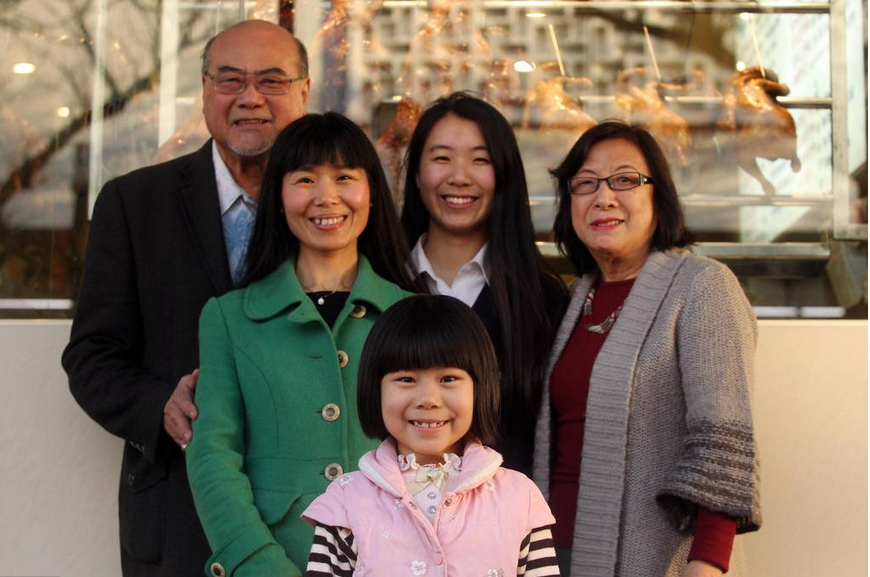
Photo

AS ANY student of history knows, the Chinese have been in Australia for a long time.

They were part of the gold rush of the 1850s and have been arriving ever since — in small numbers, and in waves.

But should they retain their Chinese culture and heritage in Australia?

Some say yes and some say no — and there will be an attempt to settle the question in The Great Gap Debate on Thursday when people from St George will join teams of people from all over Sydney to fight for the affirmative and the negative.

Organisers Mikall Chong from Bexley and Daphne Lowe Kelley from Drummoyne are reworking a similar debate held earlier this year in Mandarin.

Both believe that this sort of debate has to be run in English to attract a wider range of people. . . . . .

READ MORE

“Gaga for Gangnam: $20 Million Bet on Bringing Korean Pop Culture to China”

“Gaga for Gangnam: $20 Million Bet on Bringing Korean Pop Culture to China”

by Lilian Lin via “The Independent

Korean pop with Chinese characteristics? As the Korean pop culture craze in China continues to grow, some companies are betting heavily on the Middle Kingdom’s appetite for more Gangnam Style-style entertainment.

Hong Kong’s Media Asia and Taiwan’s Fubon Group recently teamed up with South Korea’s SM Entertainment, the country’s music and artist management giant, to set up an investment fund with $20 million in seed money to support various film &TV projects, focusing on China and global Chinese-language audiences.

SM, which manages a slate of top-tier Korean artists, including Girls’ Generation — a popular Korean girl band that won big at the YouTube Music Awards last year – says China is its most important market. According to the agreement, MediaAsia will also begin representing three artists currently backed by S.M Entertainment, including the Korean boy band EXO – a currently 11-member group that has three Chinese members and battled Justin Bieber and One Direction for Worldwide Act at MTV European Music Award last year.

The deal comes after Chinese President Xi Jinping’s visit earlier this year to Seoul, when the two countries signed a string of deals to accelerate cultural exchanges, including an agreement to allow China-Korea co-production films to be seen as domestic films, allowing them to bypass strict imported film quotas in China’s theaters.

“Korean and Chinese government are looking forward to accelerating culture exchanges,” said Han Se-min, CEO of S.M Culture & Contents. “It definitely facilitates our cooperation.”

China’s obsession with all things Korean spans, of course, Psy’s smash hit Gangnam style, which remains beloved by China’s middle-age women who love to dance in public parks, as well as toddlers encouraged to dance in kindergarten classrooms.

This year’s K-pop craze in China, though, has been given further fuel by the rom-com Korean TV series “My Love From the Star.”

The smash hit TV series not only sparked a new fondness in China for fried chicken and beer – a dish often eaten by characters on the show – it also turned Kim Soo-hyun, a fresh-faced Korean heartthrob best known for playing the show’s ageless alien character, into a most-wanted star for China’s advertisers. Ads featuring his image touting everything from mineral water to shoes to moon cakes are ubiquitous in China. The show has been watched more than 14.5 billion times since last December’s debut. . . . .

READ MORE

Chinese Calligraphy, Painting Exhibition Opens in Albania

“Chinese Calligraphy, Painting Exhibition Opens in Albania”

by Wang Siwei via “Xinhua English News

Chinese

A woman watches a traditional Chinese painting at a Chinese calligraphy and traditional painting exhibition kicked off in Tirana, capital of Albania on July 25, 2014. About 18 artists from China displayed their masterpieces to Albanians during the exhibition, which will last to July 29. (Xinhua/Wang Siwei)

READ MORE

Coming Exhibition: Chinese Painting~ Legacy of the 20th Century Chinese Masters

“Chinese Painting~ Legacy of the 20th Century Chinese Masters”

Summer

“Summer” (1985) by Chu Teh-chun [Zhu Dequn]

Who:  

Leisure and Cultural Services Dept.
Hong Kong Museum of Art
Musée Cernuschi
Asian Arts Museum of Paris
Musée National des Arts Asiatiques Guimet

When: June 13, 2014 – Sept. 21, 2014 (Sat.-Sun 10 a.m. – 8 p.m.)

Where: 

Hong Kong Museum of Art
10 Salisbury Road
Tsim Sha Tsui, Kowloon, Hong Kong

How Much:  Standard ($10)         Seniors 60+  ($5)        Students ($5)

More Information: Here.

“Paris has long been a European art and cultural hub where the liberal atmosphere enabled different streams of thought to burgeon and thrive, and since the 20th century this city has seen generations of Chinese artists hone their painting skills. Following the trend to learn from the West new ways of transforming traditional conventions, these artists left their motherland in search of inspiration. Visiting museums and learning under the guidance of masters, they acquired Western painting skills and perceptions, pioneering a revolution in Chinese painting art circles.

Artists like Liu Haisu, Xu Beihong, Lin Fengmian and Pan Yuliang left early for France. These young Chinese artists had a mission. After returning to China, they contributed immensely to the introduction of artistic trends from overseas, the development of oil painting and bouleversement of Chinese painting. They also founded fine arts schools in the country, cultivating in a new generation of painters the aspiration to further their studies in France. Among these students, Zao Wou-ki, Chu Teh-chun and Wu Guanzhong became well-known figures in the international art scene, anchoring the notion of ‘creating the art of an era’.

This exhibition showcases almost a hundred works, including oil paintings, Chinese ink paintings, sketches, lithographs, sculptures and more, demonstrating the impact and revelation of European art on 20th century Chinese painting. Exhibits have been composed from the collections of the Musée Cernuschi, Asian Arts Museum of Paris, the Hong Kong Museum of Art and several major institutions in France.

The Musée Cernuschi holds one of the finest Chinese art collections in France, and its Chinese painting collection comprises the works of various Chinese painters who travelled to France during the 20th century, illustrating their different practices and inclinations on the blending of Chinese and Western painting skills.”