Month: May 2015

Smuggled artefacts to return to Egypt from Switzerland

“Smuggled artefacts to return to Egypt from Switzerland”

by Nevine El-Aref via “Ahram Online

swiss

“A collection of 32 ancient Egyptian artefacts is to return back to Egypt in June after Egypt successfully asserted ownership of the objects.

Ali Ahmed, director of antiquities repatriation, told Ahram Online that the objects included limestone and wooden statues as well as a collection of limestone blocks from chapels across dfferent pharaonic periods.

The objects were seized by the Swiss police within the framework of a bilateral agreement between Egypt and Switzerland that prohibits the illegal import and export of cultural properties.

Minister of Antiquities Mamdouh Eldamaty said the objects are to be handed over to Egypt’s ambassador to Switzerland at the Federal Office for Culture in Bern during an event to mark tenth anniversary of the passage into Swiss law of a prohibition on illegal trade in cultural property.”

READ MORE

Cultural Policy Center, Smithsonian co-host workshop on cultural heritage protection

“Cultural Policy Center, Smithsonian co-host workshop on cultural heritage protection”

by Rebecca A. Clay

Last month, researchers, policymakers and practitioners gathered in Washington, D.C. to explore how to preserve culture in the age of ISIS and other threats. The University of Chicago’s Cultural Policy Center and the Smithsonian Institution convened the group of experts on cultural heritage protection.

Speaking at the workshop, U.S. Army archaeologist Laurie Rush said, for U.S. soldiers, protecting cultural heritage isn’t only focused on official repositories for artifacts, such as a museum. Sometimes their assignments take them to places far from city centers.

To outsiders, the pomegranate orchard in a tiny village in the remotest reaches of Afghanistan’s Helmand Province wouldn’t look like anything special. But the U.S. soldiers approaching the orchard noticed that the walls around it were painted blue, an indication that they surrounded something sacred. It turned out that the courtyard held a shrine containing a dagger once carried by a friend of the prophet Mohammed and was a site of weekly pilgrimage for villagers from the entire region.

“Is this going to be on any list of world heritage sites? No,” said Rush. But, she added, sparing cultural property from destruction goes beyond safety precautions for soldiers. “It offers a form of stability that helps communities in conflict recover in the long run.”

“Cultural heritage has become very contentious in situations of conflict,” said Richard Kurin, the Smithsonian’s under secretary for history, art and culture. “But cultural heritage can also be used to help bring people together.” This was the inspiration for the daylong workshop and public event that sought to identify research needs as well as intersections for interdisciplinary collaboration in this critical cultural policy area.

Protecting cultural heritage during war is an important priority. The United States is a party to the 1954 UNESCO (United Nations Educational, Scientific, and Cultural Organization) Convention for the Protection of Cultural Property in the Event of Armed Conflict. That doesn’t mean a commander can protect cultural property if doing so is not a military priority, said Rush. But, she added, “the better prepared our soldiers are in terms of their ability to identify and respect cultural property, the more likely they are going to come home safe and sound.”

Fulfilling the goals of the 1954 convention requires partnership between the military and academia, said Rush, a board member of the U.S. Committee of the Blue Shield, a nonprofit, non-government organization dedicated to the prevention of destruction and theft of cultural property during conflict.

She urged academics not to share privileged information, noting that comments by scholars about the use of satellite imagery to assess whether or not ISIS was destroying cultural property actually pushed the extremists to destroy what they had previously only pretended to destroy.

“And don’t perpetuate myths, Rush continued. Take the Bamiyan Buddhas, for example. Even among scholars, said Rush, there’s a common misunderstanding that the Buddhas were destroyed because they had human faces. “In actuality they were destroyed to demoralize the Hazara people of the Bamiyan valley,” she said, explaining that the Taliban paid engineers to ensure the empty niches remained standing.

READ MORE

Art I Love ~ Cherry Blossom

deceptivelyblonde's avatarDeceptively Blonde

“Cherry Blossom” by Tom Prante

View original post

TEHRAN’S MAYOR REPLACES ADS ON ALL 1,500 CITY BILLBOARDS WITH FAMOUS ARTWORKS

“TEHRAN’S MAYOR REPLACES ADS ON ALL 1,500 CITY BILLBOARDS WITH FAMOUS ARTWORKS”

by Hannah Ghorashi via “Art News

Ghalibaf. COURTESY TEHRAN.IR

As reported by the New York Times today, Dr. Mohammad Baqer Ghalibaf, mayor of Tehran (“[and] a former Revolutionary Guards commander, retired pilot, and the loser of two presidential elections,” the article piles on neutrally) has ordered all of the city’s 1,500 billboards (a significant source of income from advertisements) to be replaced with copies of iconic works of both Western and Iranian art.

The project, installed almost overnight, was organized by the Organization of Beautification of Tehran, a municipal coalition created to improve appearance of parks and public areas. Mojtaba Mousavi, a representative counselor, commented to the Times, “Our people are too busy to go to museums and galleries, so we decided to turn the entire city into a huge gallery.”

Ghalibaf’s sudden zeal for visual art, the article notes, is likely politically motivated. A “canny and ambitious politician despite the two defeats,” Ghalibaf may intend to run for office in the 2016 presidential elections. Art collector and historian Hamid Taheri told the Times, “[This project] is clearly an attempt to win [the people’s] favor. I don’t mind though, it’s amazing to see art across the city.”

Now rising above the streets of Iran are images of Rembrandt paintings, photos by Henri Cartier-Bresson, and Rothko Nos. 3, 10 and 13. Also included is a reproduction of Munch’s The Scream, a choice that will no doubt strike certain residents of Tehran (“who spend hours a day on congested roads”) as empathetic.

The Iranian works, on the other hand, had been selected with far more precaution, or, to put it less euphemistically, with a censoring eye. In Mousavi’s words, “some of the more modern work could lead to objections that we wanted to avoid.”

Only pieces by deceased artists were considered, resulting in the choice of relatively tame images of Persian carpets, paintings inspired by the Book of Kings, and works by painter Bahman Mohassess, fondly known as the “Persian Picasso.”

READ MORE

Unique Exhibition Showcases Works of Central Asian Artists

“Unique Exhibition Showcases Works of Central Asian Artists”

by RUFIYA OSPANOVA via “The Astana Times

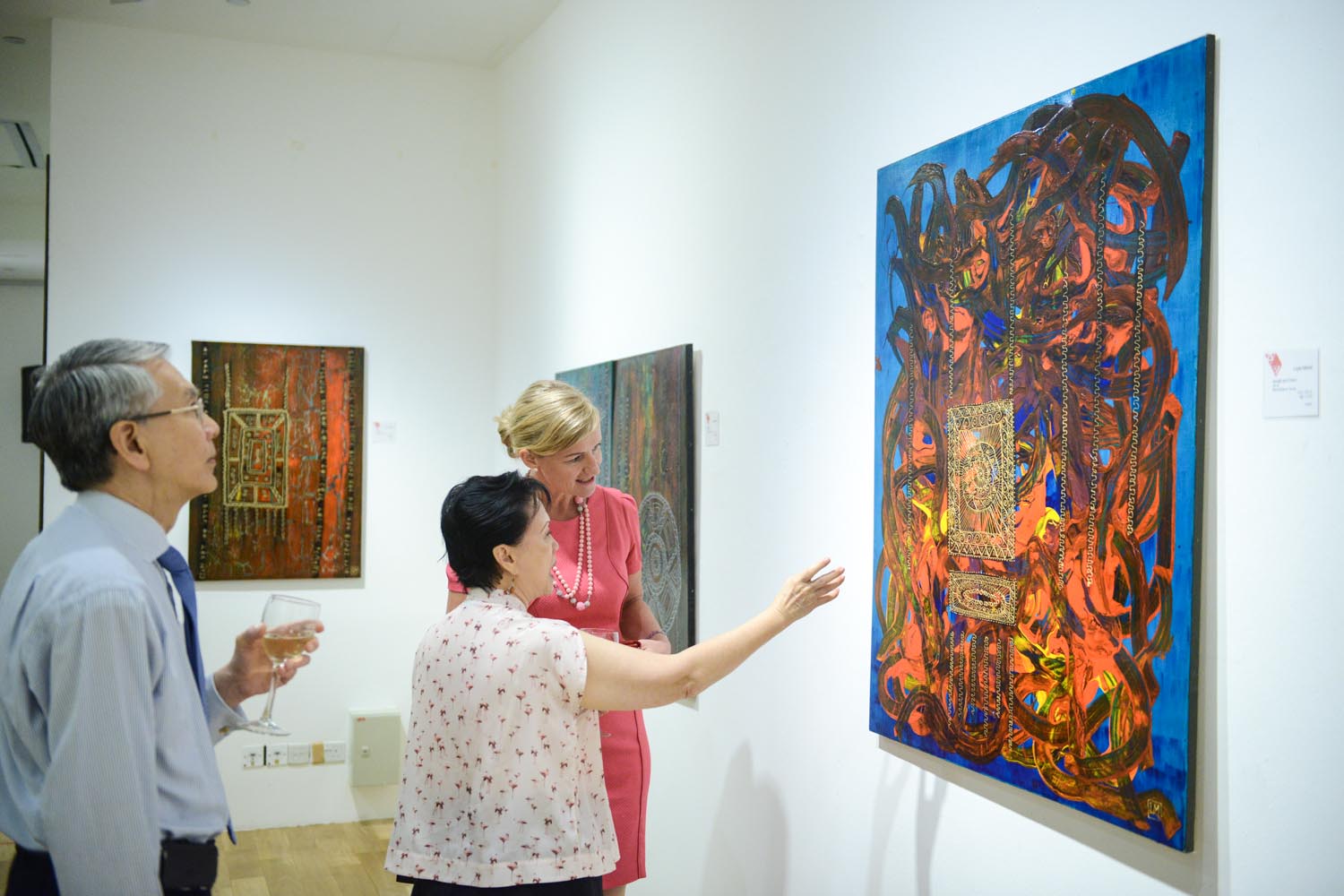
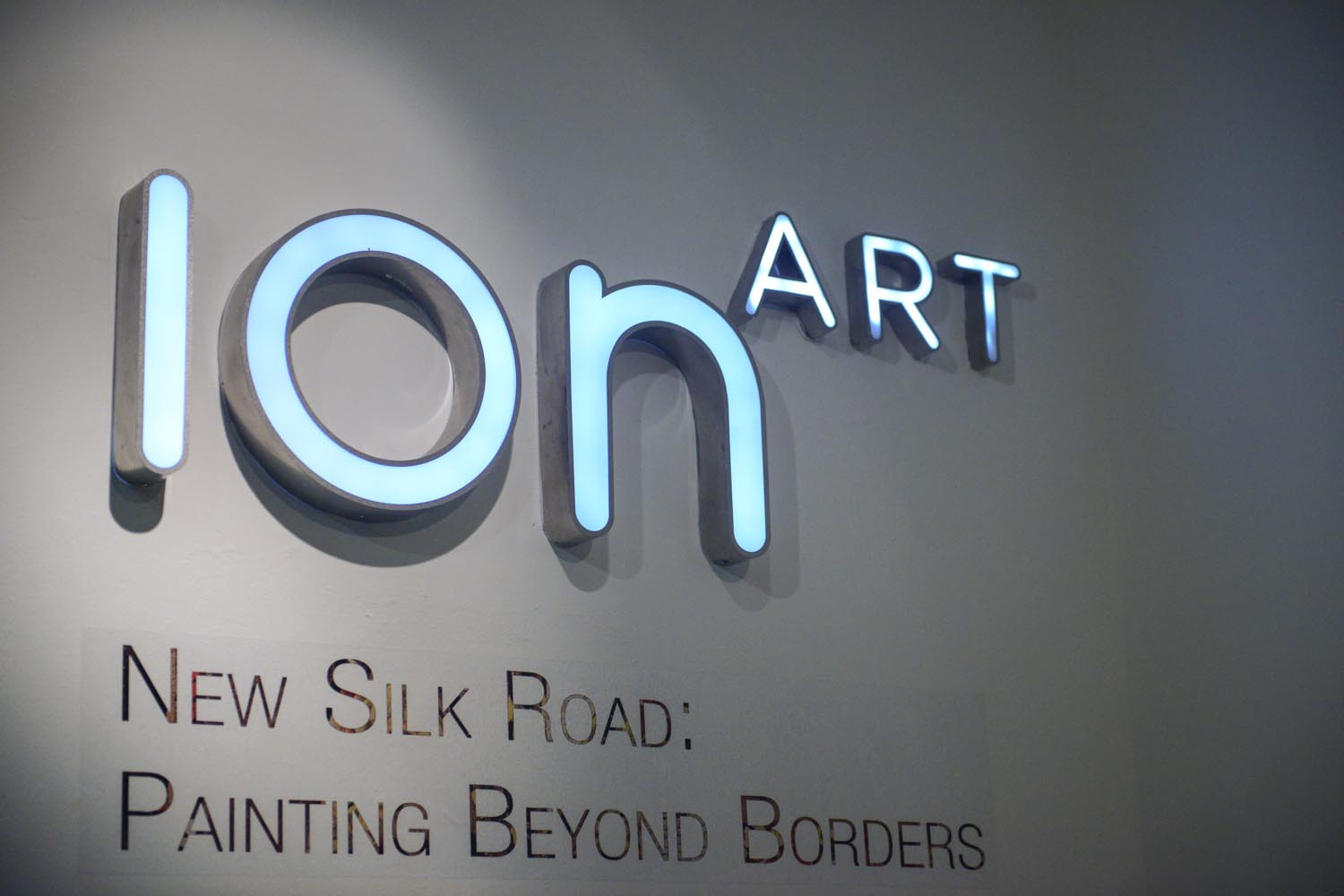
SINGAPORE – “New Silk Roads: Painting Beyond Borders,” the first exhibition of Central Asian artists, was showcased April 21 in Icon Gallery here. The event was organised by ENE Central Asian Arts with the support of the Kazakh Embassy in Singapore and Lassale Singapore University of Art.

BIL_3116

The exhibition showed 37 works, including those of artists from Kazakhstan, Turkmenistan and Uzbekistan. Paintings and abstract compositions by Central Asian artists generated great interest among the many visitors. 

Kazakhstan demonstrated paintings of the Amulet series by the nation’s renowned artist Leyla Mahat. In her works, Mahat tells about the role of amulets in the daily life of nomads, which were used not only as decoration but also as charms from the evil eye.

Amulet paintings recreate ancient jewellery uncovered in archaeological excavations and reconstructed by Kazakh scientists and her images relive the work of archaeologist Zeinolla Samashev. 

BIL_3029

Artist, archaeologist and artisan are all connected through the materiality of the gold ornaments and their contemporary artistic representations, as well as by the land once inhabited by the ancient peoples which now forms their burial place and the physical basis of the modern state. The choice of depicting jewellery, the wearing of which was an aristocratic prerogative, is also suggestive of the lineage which the artist claims as validation for the modern state. The appeals to the forces of history and heredity are perhaps nowhere better illustrated than in “Amulet and Colour” (2014), where their potency seems to glow red-hot, their vividness embodying itself in the profuse viscosity of paint, tactile and Medusa-like in its writhing. 

According to the organisers, such exhibitions in general allow representatives of Central Asian countries not only to learn more about the historical values of each other, but in particular help to strengthen ties between Kazakhstan and Singapore.  . . .

READ MORE