Asia

TaiwanFest showcases culture, art, and paper cranes

“TaiwanFest showcases culture, art, and paper cranes”

by Alison Shouldice via “The Star

Harry Chen folded 2,345 paper cranes while recovering from kidney cancer.

For Harry Chen, a folded paper crane is a hope for many things: freedom, democracy, world peace — and his own good health.

Chen, a Taiwanese-Canadian, has recently made a habit of folding small origami paper cranes.

He has also spent the last two years living with kidney cancer.

“When I was in the hospital, I started to fold those things,” he said, but it’s a skill he’s had for some time. At six years old, his kindergarten teacher first taught him origami to stop his crying.

After undergoing surgery, chemotherapy and radiation, Chen’s cancer is now under control. In July 2014, when he was out of the hospital but still recovering, he began folding more cranes in his spare time: on the bus, in the doctor’s waiting room and while out shopping with his wife.

He was inspired by the story of Sadako Sasaki, a Japanese girl who famously attempted to fold 1,000 paper cranes in 1955 for good health. Sasaki developed leukemia after she had been exposed to radiation from the Hiroshima atomic bomb as a young child.

With Sasaki in mind, Chen kept folding, and just 10 months later, he stopped at 2,345: a representation of Taiwan’s 23.45 million population.

Chen is displaying his cranes, attached onto mobiles, at TaiwanFest this weekend at the Harbourfront Centre. On Friday evening, a crowd had already gathered around Chen’s display.

Organizers expect up to 50,000 people to pop in between Friday and Sunday for the festivities.

In addition to Chen’s mobiles, there are several other art and cultural pieces on display throughout the Harbourfront grounds. The festival is multidisciplinary, incorporating art, music, culture and food.

It’s held for two weekends back to back: this weekend in Toronto the next in Vancouver. The guests tend to be Taiwanese-Canadians coming from all areas of the city, according to the festival’s managing director Charlie Wu.

But the event is also for Torontonians who may not know a lot about Taiwan.

“It’s important for TaiwanFest to be in downtown venues,” Wu said. “We always feel that Taiwanese-Canadians and Asian-Canadians like to share their cultures in a more mainstream environment where other Canadians get to see it.”

Diverse programming is the key to attracting non-Taiwanese Canadians to the festival, he said. For instance, this year, they are hosting a fashion designer whose heritage is of Taiwan’s indigenous peoples, who dwelled on the island for thousands of years before the now-predominant Han Chinese began arriving in numbers in the 17th century. It’s hoped that presence of the designer, known simply as Andre, attracts Torontonians with a general interest in fashion or indigenous peoples’ culture and art. . . . .

READ MORE

Now THAT’S delicate work! Artists carve intricate portraits onto egg shells in quirky new art trend

“Now THAT’S delicate work! Artists carve intricate portraits onto egg shells in quirky new art trend”

by Qin Xie via “Daily Mail

Egg shells artist Zhao Zexi has carved out flowers, above, and then inscribed it with the words 'wealth' in paint

Yunnan born Zhao Zexi is the artist behind the egg carvings.

The 27 year old revealed in an interview that he’s been carving egg shells for around 10 years and has worked with everything from hen’s eggs to duck and ostrich eggs.

He said: ‘I liked drawing from a young age. When I went to Hangzhou to train as a chef, my main job was food carving.’

‘I stumbled across egg carving by accident after seeing it on television. Since then I’ve been obsessed with the idea so started learning to do it.’

Initially he found that every egg shell he tried to carve collapsed as soon as the blade touched its surface.

Zhao Zexi creates human portraits, like Abraham Lincoln above, as well as Chinese landscapes and plants

Zhao Zexi creates human portraits, like Abraham Lincoln above, as well as Chinese landscapes and plants

Egg art created by Zhao Zexi start from 500 Yuan (£50) for hen's egg and 6,000 Yuan (£600) for an ostrich egg

Egg art created by Zhao Zexi start from 500 Yuan (£50) for hen’s egg and 6,000 Yuan (£600) for an ostrich egg

But with hard work, determination and a little help from other egg carving artists, he soon progressed from carving words to landscapes to human portraits.

The work is extremely time consuming.

Carvings on hen’s eggs require one or two days to complete while goose and ostrich eggs need 10 to 15 days.

However, he is able to charge 500 Yuan (£50) for a finished hen’s egg and around 6,000 Yuan (£600) for an ostrich egg.

Last year, he quit his job as a chef to concentrate on egg carving.

Speaking of his decision, he said: ‘There’s people who ask about my work every day. I’ve already received 10 commissions from art collectors.’

Zhu De featured in the egg shell carving by Li, above, was one of the pioneers of the Chinese Communist Party

Zhu De featured in the egg shell carving by Li, above, was one of the pioneers of the Chinese Communist Party

Li's work include Chinese leaders such as Mao Zedong and Soviet figures like Carl Marx and Joseph Stalin

Li’s work include Chinese leaders such as Mao Zedong and Soviet figures like Carl Marx and Joseph Stalin

Zhao Zexi is not the only egg shell artist to emerge recently.

A 29 year old woman in Jiangsu, eastern China, named as Han Liping shared her work in January this year.

Han normally works at a fast food restaurant but started egg carving as a hobby.

She empties the eggs of their content before starting work but says that every stage of the carving throws up challenges.

The shells breaking is the most obvious concern but if she makes any mistakes, she will have to start over again as there is no way to repair the damage.  . . . .

READ MORE

Gates of the Lord: The Tradition of Krishna Paintings

“Gates of the Lord:

The Tradition of Krishna Paintings”

Who:  

Art Institute of Chicago

When: Sept. 13, 2015 – January 3, 2016 (Hours Vary)

Where: 

Art Institute of Chicago
111 South Michigan Ave.
Chicago, IL 

More Information: Here.

This fall, the Art Institute of Chicago offers a glimpse into one of the world’s most intimate religious traditions. Bringing together over 100 artworks from private and public collections in India and the United States, Gates of the Lord: The Tradition of Krishna Paintings is the first major U.S. exhibition to explore the unique visual culture of the Pushtimarg, a Hindu denomination from Western India.

Founded in the 16th century by the saint and philosopher Shri Vallabhacharya (1479–1531), the Pushtimarg is a religious community dedicated to the devotion of Shrinathji, a divine image of the Hindu god Krishna as a seven-year-old child. The religious and artistic center of the sect is based in the temple town of Nathdwara (literally, “The Gates of the Lord”), near Udaipur in the state of Rajasthan, India. Scholars and artists have long been fascinated by the distinctive and highly aestheticized manner in which members of this group venerate Shrinathji, as well as by the legacy of miniature paintings created as a record of such worship. This exhibition showcases centuries ofpichvais (textile hangings) and miniature paintings that have been created by and for the Pushtimarg in devotion of Shrinathji.

The exhibition takes visitors through a year in Nathdwara, where the daily worship of Shrinathji is characterized by the changing seasons and a bustling festival calendar. Gallery by gallery, visitors are introduced to the pichvais used as backdrops for Shrinathji in his shrine, each uniquely suited to a particular season or festival. The accompanying miniature paintings offer further insight into the Pushtimarg sect: its mode of veneration, history, and important priests and patron families. Enhancing the experience of the sect’s rich culture are festival and devotional music, a shrine reconstruction, and touchscreen kiosks that allow visitors to page through religious manuscripts, an artist’s sketchbook, and a historic photo album. The exhibition concludes with an exploration of the works, sketches, and observations of prominent 20th- and 21st-century Nathdwara artists who have kept the painting tradition flourishing through the present day.

Gates of the Lord comprises drawings, pichvais, paintings, and historic photographs borrowed chiefly from two major private collections in India, the Amit Ambalal Collection (Ahmedabad, India) and the TAPI Collection (Surat, India). These rare loans are augmented by important objects from a number of public and private collections within the United States, including the Art Institute’s own permanent collection, in order to present the richest possible story of Pushtimarg art and tradition.

Sponsors
Lead Sponsorship for Gates of the Lord: The Tradition of Krishna Paintings has been provided by Nita and Mukesh Ambani and the Reliance Foundation.”

Khon Masked Dance – Thailand

Unique Exhibition Showcases Works of Central Asian Artists

“Unique Exhibition Showcases Works of Central Asian Artists”

by RUFIYA OSPANOVA via “The Astana Times

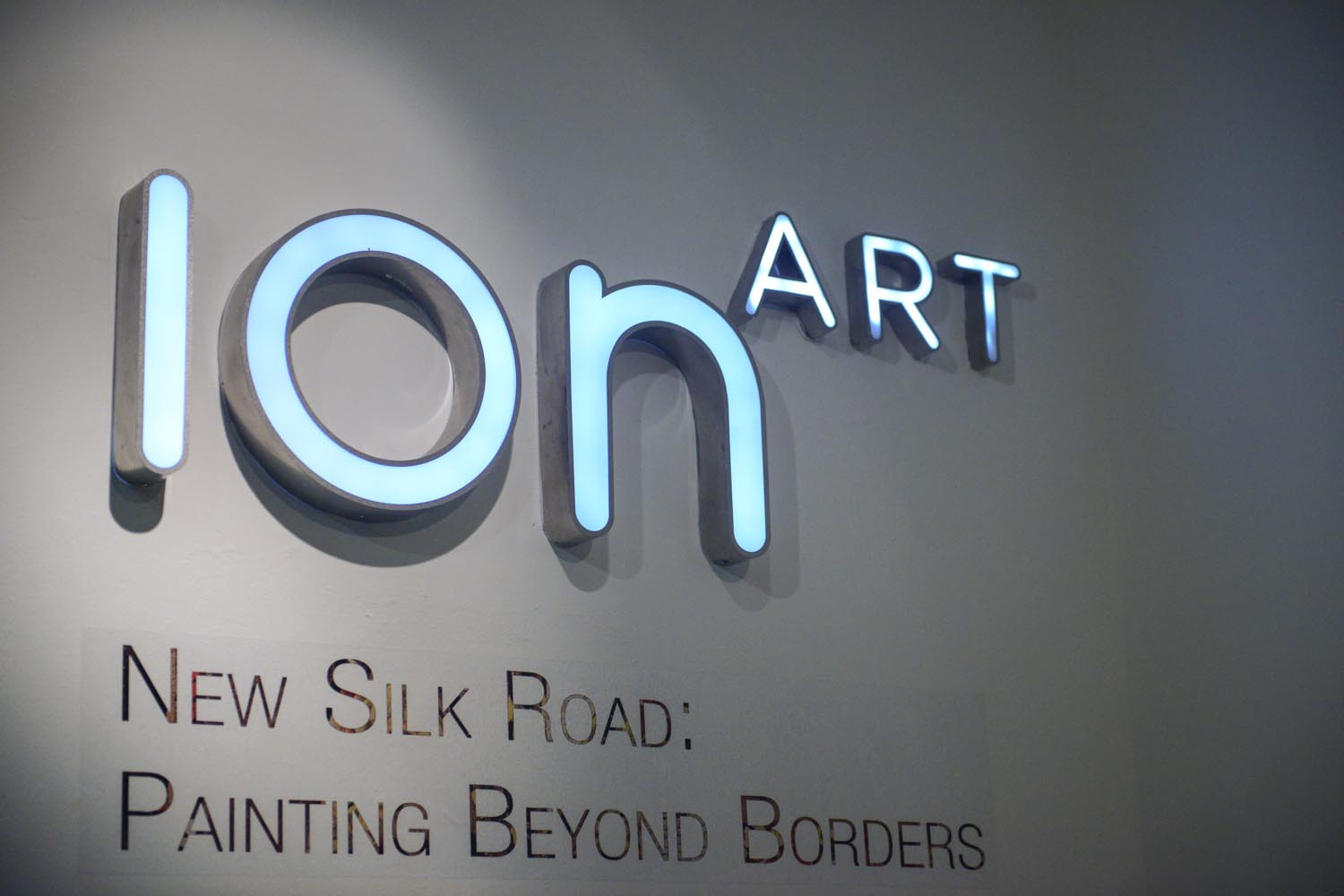
SINGAPORE – “New Silk Roads: Painting Beyond Borders,” the first exhibition of Central Asian artists, was showcased April 21 in Icon Gallery here. The event was organised by ENE Central Asian Arts with the support of the Kazakh Embassy in Singapore and Lassale Singapore University of Art.

BIL_3116

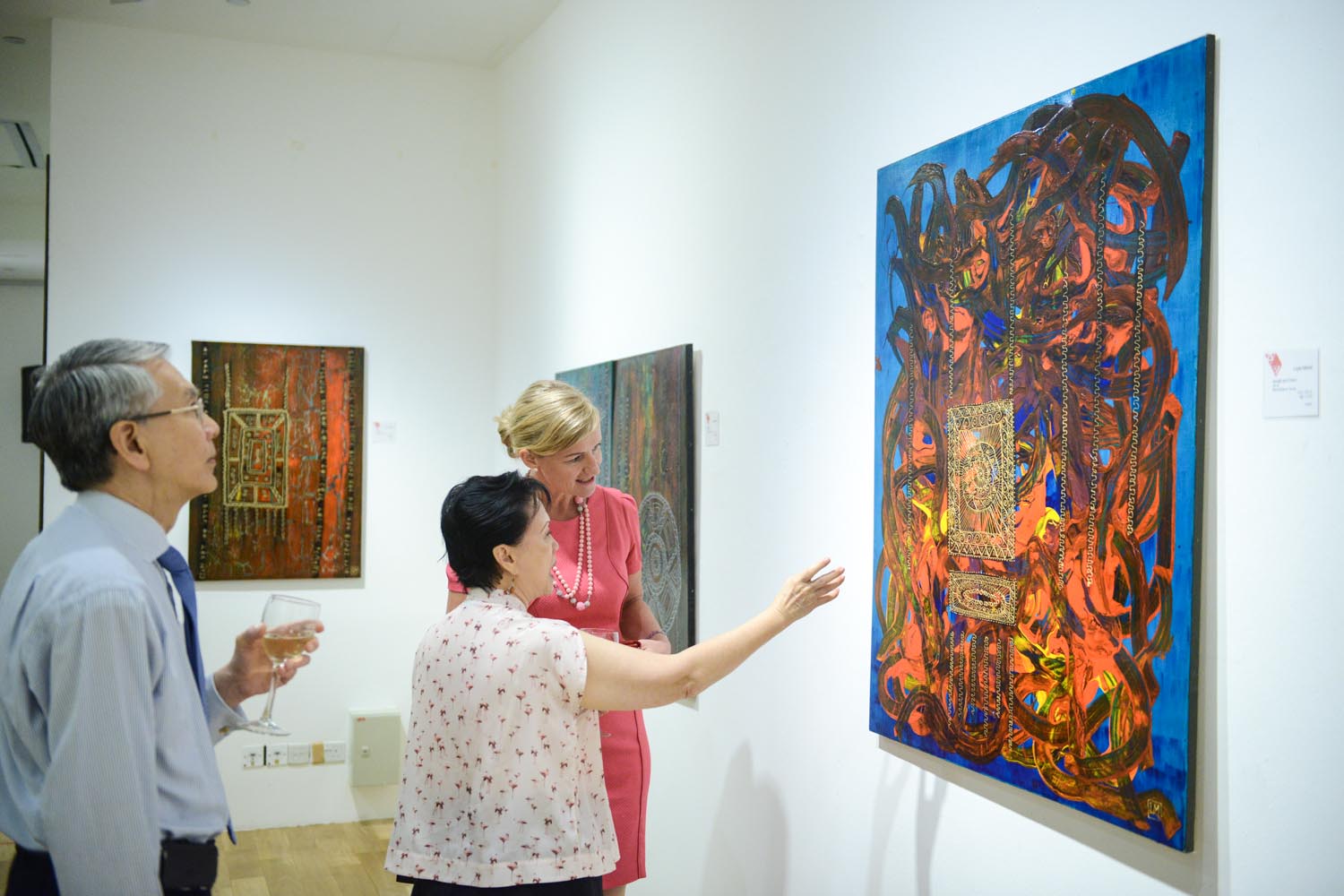
The exhibition showed 37 works, including those of artists from Kazakhstan, Turkmenistan and Uzbekistan. Paintings and abstract compositions by Central Asian artists generated great interest among the many visitors. 

Kazakhstan demonstrated paintings of the Amulet series by the nation’s renowned artist Leyla Mahat. In her works, Mahat tells about the role of amulets in the daily life of nomads, which were used not only as decoration but also as charms from the evil eye.

Amulet paintings recreate ancient jewellery uncovered in archaeological excavations and reconstructed by Kazakh scientists and her images relive the work of archaeologist Zeinolla Samashev. 

BIL_3029

Artist, archaeologist and artisan are all connected through the materiality of the gold ornaments and their contemporary artistic representations, as well as by the land once inhabited by the ancient peoples which now forms their burial place and the physical basis of the modern state. The choice of depicting jewellery, the wearing of which was an aristocratic prerogative, is also suggestive of the lineage which the artist claims as validation for the modern state. The appeals to the forces of history and heredity are perhaps nowhere better illustrated than in “Amulet and Colour” (2014), where their potency seems to glow red-hot, their vividness embodying itself in the profuse viscosity of paint, tactile and Medusa-like in its writhing. 

According to the organisers, such exhibitions in general allow representatives of Central Asian countries not only to learn more about the historical values of each other, but in particular help to strengthen ties between Kazakhstan and Singapore.  . . .

READ MORE