Ancient

Nanyang Museum of Han Stone Gravings, Henan, China

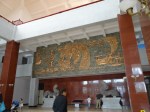
Recently, I traveled abroad with about 20 other teachers to Southern Henan during the Fall Holiday.  We hired a tour guide to arrange our trip, and one of the places on his list was the Nanyang Museum of Han Stone Gravings. 

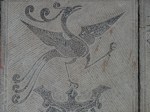
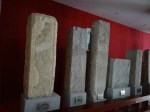
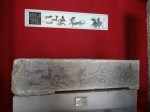
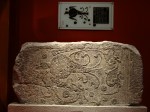
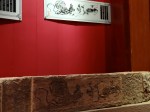
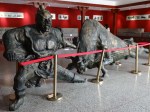
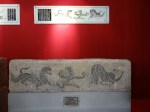
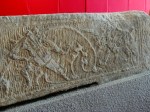
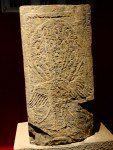
This was a really fascinating place. The museum holds hundreds of stones engraved with various pictures and images collected from ancient Han tombs. We were told that they were more than 1000 years old!

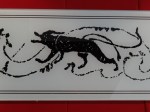
I was intrigued by the carvings themselves. Naturally, they varied on the subject of their work – dinners, hunting, musicians, kings and counsels. It’s always neat to see art demonstrating the use of ancient musical instruments or to watch fashions change as the years go by. But I was really interested to see some of the animals are actually pre-historic. One was clearly a dinosaur (you know the kind that is Sarah on The Land Before Time?). Two were dragons, but only one had wings.

You kind of expect the dragons, but the differences in how they were depicted suggests two origins to the dragon legend. One was wingless and quite fat. The other had wings and was longer and thinner. Add in the dinosaur, and it was all really cool!


Islamic State Raids Biblical City of Ninevah, Sells Ancient Treasures For Millions

Islamic State Raids Biblical City of Ninevah, Sells Ancient Treasures For Millions

by Thomas D. Williams via “Breitbart

The sale of archaeological treasures from the Biblical city of Nineveh and the surrounding territory is becoming one of the main sources of funding of the Islamic State in Kurdistan as well as in Syria, according to reports by the Italian newspaper Corriere della Sera.

A USB stick recovered from an Islamic State militant by Iraqi intelligence in August documents the value of revenues on the black market at $32 million. Among the items for sale: hundreds of headstones, inscriptions, mosaics, and adornments.

According to Qais Hussein Rasheed, head of the state-run Museums Department in Iraq, black market dealers are entering areas under Islamic State control to buy these items.

In their zeal to destroy what they consider to be heresy, Islamic State militants have demolished many artifacts but they are cashing in at the same time, extracting valuable relics to sell on the international black market.

Profiting from religious artifacts represents a curious double game. On the one hand, the precepts of Wahhabism, a fundamentalist Islamic sect, require the destruction of every object of worship not directed to Allah. This has justified the demolition of churches, mosques, and tombs, and has been carried out with maximum media exposure.

On the other hand—this time without advertising it—the same IS leaders are now either selling artifacts directly or granting access to occupied archeological zones to teams of professional looters. They then split the revenues from the plunder according to the Islamic law of Khums: a fifth of the spoils must be paid to God, ie, the Islamic state.

The Turkish border is only a few hours away with Western brokers waiting to transfer the artifacts to the major black art markets: London, New York, and Tokyo. . . . .

READ MORE

‘Stunning’ Roman Cockerel Goes on Display

Question for my Readers! – Is this just good History Preservation, Our right to Cultural Heritage, or Tomb Robbing? ** DB

“‘Stunning’ Roman Cockerel Goes on Display”

by Victoria Woollaston via “Daily Mail

Three years since it was discovered during excavations on an ancient cemetery, a rare bronze Roman cockerel has been given a permanent home.

The 2nd century figurine is believed to be one of only nine ever found in the Roman Empire, and is part of a new exhibition at the Corinium Museum in the Cirencester.

Other finds on display include a hoard of almost 1,500 Roman coins, and the perfectly preserved vase it was found in.

This bronze and enamel cockerel was found in a child's grave in Roman Cirencester in 2011 - and has been painstakingly restored. It is now on display at the Corinium Museum

This bronze and enamel cockerel was found in a child’s grave in Roman Cirencester in 2011 – and has been painstakingly restored. It is now on display at the Corinium Museum

Archaeologists made the discoveries three years ago while excavating a western cemetery at the former Bridges Garage site on Tetbury Road in Cirencester – or Corinium as it was known when it was the second largest town in Roman Britain.

The bronze and enamel cockerel was said to have been placed in the grave of the two-year-old Roman girl by her parents, and experts believe it was used to ask the Gods to protect her.

They also believe the expensive gift was placed in the grave to ease their daughter’s transition into the ‘next world’.

It is the most significant Roman cemetery investigation in the town since the early 1970s,’ said a spokesman for the town’s Corinium Museum.

‘The cockerel found underneath the former Bridge’s Garage site – now St James’s Place – is one of only nine known cockerel figurines from the Roman world, and is the only example with its tail intact.

‘Displayed with the cockerel are an exceptional example of a Roman flagon and a selection of jewellery which include beads and bracelets found in a richly furnished child’s grave.

‘These are high status objects, which give a fascinating insight into the people of Corinium.

Neil Holbrook, Chief Executive of Cotswold Archaeology added: ‘The cockerel is the most spectacular find from more than 60 Roman burials excavated at this site.

‘It was excavated from the grave of young child and was placed close to its head. Interestingly a very similar item was found in Cologne in Germany and it looks like they both could have come from the same workshop based in Britain.’

The Tetbury Hoard, also on display at the museum, contain 1,437 silver and copper-alloy 3rd century Roman coins.

‘The hoard is the museum’s first Roman Coin Hoard and comes from a fascinating period of political upheaval across the Roman Empire,’ continued the museum’s spokesman.

‘It was a time of rapid succession of rulers and usurpers. The coins themselves tell this story.

‘Depictions and inscriptions represent 12 emperors from just a 16 year period.’

The child was buried wearing hobnailed shoes and was accompanied by a pottery feeding vessel and the remarkable enamelled bronze figurine of a cockerel.

The cockerel is 5-inches tall (12.5cm) and the breast, wings, eyes and ‘comb’ are inlaid with enamel, which now appears blue and green.

There is a separately moulded tail plate, also enamelled, with ‘openwork’ decoration. The beak is shown open, in the act of crowing.

READ MORE

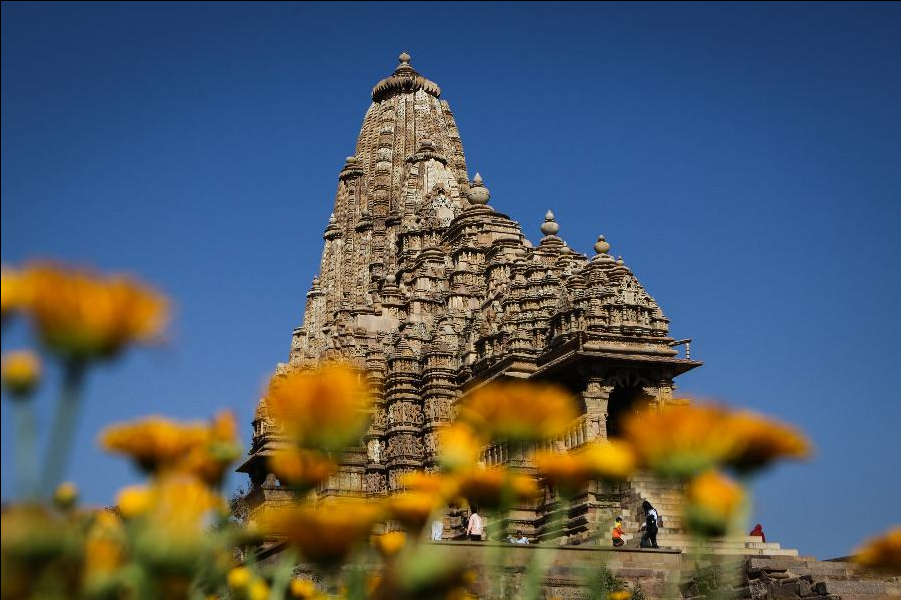
World Cultural Heritage: Khajuraho Group of Monuments in India

“World Cultural Heritage: Khajuraho Group of Monuments in India”

by Yamei Wang via “Xinhuanet”

Photo

SEE MORE PHOTOS

“Australia Returns Two Stolen Ancient, Priceless Idols to India”

“Australia Returns Two Stolen Ancient, Priceless Idols to India”

via “IBNLive.com”

New Delhi: Australian Prime Minister Tony Abbott who is on a state visit to India is returning two looted idols seized from Australian museums during a meeting with the Prime Minister Narendra Modi in New Delhi on Friday.

Abbott is personally delivering the National Gallery of Australia’s Rs 30 crore ($5 million) Dancing Shiva or Nataraja Ardand and the Art Gallery of New South Wales’s Rs 2 crore ($300,000) Ardhanarishvara to Modi as a “gesture of good will” at a state reception at the Rashtrapati Bhawan in the evening.

Both priceless objects were stolen from temples in India and later sold to the museums by Manhattan dealer Subhash Kapoor, who, his gallery manager has admitted, created falsified ownership documents to hide their illicit origins.

Australia returns two stolen ancient, priceless idols to India

Australian Prime Minister Tony Abbott is personally delivering the Dancing Shiva or Nataraja Ardand and Ardhanarishvara to Narendra Modi.

The Australian returns mark the first major repatriations in the Kapoor case, but are unlikely to be the last. Dozens more Kapoor objects acquired by the Australian museums were sold with false ownership histories similar to those used with the returned objects. Several will likely play a prominent role in Kapoor’s criminal trial in Chennai, India, which has been on hold pending the return of the NGA’s looted Shiva says an exclusive website for the Hunt for Looted Antiquities in the World’s Museums ‘Chasing Aphrodite’.

The Tamil Nadu Police had produced evidence to establish that the idol was stolen from a temple at Sripuranthan in Tamil Nadu. They had arrested Kapoor for his alleged involvement in the theft. He is now lodged in the Chennai prison and is facing trial.

Meanwhile, Kapoor’s international network of looters and smugglers is still being mapped by authorities in the United States, who have already seized over Rs 600 crore ($100 million) in art from the dealer’s Manhattan gallery and storage facilities.

Federal investigators in the United States are methodically working through mountains of evidence seized from Kapoor, probing his ties to a number of American and foreign museums that did business with the dealer. Indian authorities, meanwhile, are considering a broader campaign to reclaim stolen antiquities from foreign institutions.

Over the past two years, we’ve traced hundreds of suspect Kapoor objects to museums around the world. To date, the Kapoor case has received the most attention in Australia, whose National Gallery for months stonewalled press and government inquiries and dismissed mounting evidence before agreeing to take the stolen idol off display. The Art Gallery of New South Wales took a slightly more proactive approach, releasing the ownership history that Kapoor supplied for its sculpture of Ardhanarishvara (left.) Soon after, Indian art blogger Vijay Kumar identified the temple from which the sculpture was stolen. . . . .

READ MORE