Art & Culture

Rare $39 Million Ming Dynasty Cup to Be Part of Auction

Rare $39 Million Ming Dynasty Cup to Be Part of Auction

by Frederick Balfour

A 15th-century ceramic cup from the Ming Dynasty will be included in a Sotheby’s (BID) auction next month in Hong Kong, after the seller retracted an earlier decision to pull the sale.

The cup, valued at HK$200 million ($26 million) to HK$300 million, will be offered at Sotheby’s on April 8, according to Nicolas Chow, deputy chairman of Sotheby’s Asia and International Head of Chinese Ceramics and Works of Art.

The seller, a Swiss collector in his nineties who had earlier asked to pull the cup from the sale, changed his mind, said Giuseppe Eskenazi, who originally sold the piece to the collector in 2000 and is advising the seller.

The cup was promoted in a March 6 press release by Sotheby’s as a “potential record breaker” and is considered the finest piece of Chinese ceramics in private hands. It comes from the Meiyintang Collection, whose owner has vacillated over selling it, said Eskenazi, a London-based dealer who originally sold the piece to him in 2000.

“It’s such a great treasure, he didn’t want to part with it as he treasured it so much,” Eskenazi, who helped the seller place pieces with Sotheby’s before, said by telephone today. “But finally, he agreed a few hours ago to go ahead.”

Emperor Allegory

Eskenazi, who bought the cup for almost HK$30 million in 1999, sold it one year later to its present owner.

“This is the most valuable piece of porcelain in any private collection,” he said.

The cup, made for the Chenghua emperor (1465-1487) is considered the most rare of Chinese ceramics and may set an auction record, according to the Sotheby’s press release. It has been nicknamed the “Chicken Cup” because it depicts a rooster, his hen and their chicks, an allegorical representation of the emperor, the empress and their subjects.

“We are very excited to present this in the sale,” Chow said by telephone. “It is the single most expensive, single most sought after Chinese porcelain ever offered at auction.”

The “Chicken Cup” is only 8 centimeters (3.1 inches) in diameter, delicate and dainty,  . . . .

READ MORE

Small Museums

“Small Museums”

by Orhan Pamuk via “New York Times

“In the age of mega-institutions and competitive building, the Turkish novelist Orhan Pamuk pays homage to the more personal places, like his own Museum of Innocence, whose character and content evoke a deeper experience.

My favorite museums tend to be small, the kind that showcase the inventiveness and the life stories of private individuals. Though I admire national museums like the Louvre or the British Museum, when I’m traveling and whenever I set foot in a new city, the first places I rush to see are not these institutions that fill me with a sense of the power of the state and of the history of its people, but those that will allow me to experience the private world and the vision of a passionate individual. I have so much respect for the efforts of those creative people who devoted the final decades of their lives to the task of turning their homes and their studios into museums for the public to visit after their deaths. These small museums are usually hidden on side streets just outside the center of large Western cities. They have the power to make us rediscover a feeling that the big national museums, looking more and more like fun-filled shopping malls with each passing day, can no longer make us feel, and that we have begun to forget. Museums must not confine themselves to showing us pictures and objects from the past; they must also convey the ambiance of the lost time from which those objects have come to us. And this can only happen through personal stories.

The newly reopened Rijksmuseum in Amsterdam, for example, is a dazzling demonstration of (more…)

Thousands of Artifacts Seized at Rural Indiana Home

I don’t have the whole story or all the facts. That said, if this article is true: they haven’t charged the man, there is no offered evidence as to reasonable suspicion, and there is no explanation given as to what precisely he did wrong. Instead they have taken items worth immeasurable value from a 90 year old man that will take more than his life for them to “catalog.” Just imagine the potential threat to all museums and private owners if it is considered acceptable for officials to take collections just to “verify,” without probable cause for suspicion.  It’s incomprehensible.   ** DB

“Thousands of Artifacts Seized at Rural Indiana Home”

by Diana Penner via “IndyStar”

inidc5-6eovpgs4v7o1427r8c1g_original

“FBI agents Wednesday seized “thousands” of cultural artifacts, including American Indian items, from the private collection of a 91-year-old Rush County man who had acquired them over the past eight decades.

An FBI command vehicle and several tents were spotted at the property in rural Waldron, about 35 miles southeast of Indianapolis.

The man, Don Miller, has not been arrested or charged.

FBI agents are working with art experts and museum curators, and neither they nor Jones would describe a single artifact involved in the investigation, but it is a massive collection. Jones added that cataloging of all of the items found will take longer than “weeks or months.”

“Frankly, overwhelmed,” is how Larry Zimmerman, professor of anthropology and museum studies at Indiana University-Purdue University Indianapolis described his reaction. “I have never seen a collection like this in my life except in some of the largest museums.”

The monetary value of the items and relics has not been determined, Jones said, but the cultural value is beyond measure. In addition to American Indian objects, the collection includes items from China, Russia, Peru, Haiti, Australia and New Guinea, he said.

The items were found in a main residence, in which Miller lives; a second, unoccupied residence on the property; and in several outbuildings, Jones said. The town originally was Iroquois land.

The objects were not stored to museum standards, Jones said, but it was apparent Miller had made an effort to maintain them well. (more…)

“French police recover painting by Rembrandt (or in the style of Rembrandt) stolen in 1999 from the municipal museum in Draguignan”

French police recover painting by Rembrandt (or in the style of Rembrandt) stolen in 1999 from the municipal museum in Draguignan

Via ArtCrime.Blogspot

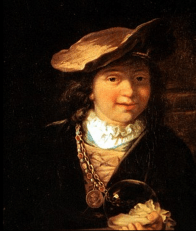
“Journalist Vincent Noce reports in the French newspaper, Liberation, that a Rembrandt painting stolen in 1999 has been recovered in Nice (“Un Rembrandt volé en 1999 e été retrouvé à nice, 19 March 2014) although the thieves may have discovered the work was not by the ‘genius from Amsterdam’.
Noce reported that Tuesday afternoon French police from the unit assigned to fighting trafficking in cultural goods (OCBC) arrested two men (ages 44 and 51 years old) for trying to sell a painting stolen 15 years ago from the municipal museum in Draguignan in southeastern France. The oil painting, measuring 60 cm by 50, is attributed to Rembrandt and known as “Child with a Soap Bubble”. According to Noce’s article, the recovered painting has an estimated value of 4 million euros (U.S. $5.56 million) — if it is indeed by the Dutch master and not by an artist inspired by Rembrandt. According to the article, the museum’s inventory shows that the painting was taken from the Château de Valbelle [now in ruins] in Tourves during the revolution in 1794. 
Sophie Legras, writing for L’Agence France-Presse (AFP) and published in Le Figaro, reports that judicial police in Nice helped the OCBC in recovering the painting . . . . .”

READ MORE

“Saving Guangxi’s Cultural Heritage from Decline”

“Saving Guangxi’s Cultural Heritage from Decline”

via “South China Morning Post”

tpbje2014040239b.jpg

Dancers from the Zhuang ethnic group perform at the San Yue San festival in Wuming county, Guangxi Zhuang Autonomous Region, on Wednesday. Photo: Xinhua


Residents of Guangxi Zhuang Autonomous Region are enjoying a new two-day official holiday the local government has offered to encourage them to participate in an annual ethnic minority singing festival.

Wednesday was the third day of the third month of the Chinese lunar calendar, when crowds traditionally gather to sing in the antiphonal, or call-and-answer, style to find love and make new friends.

Historically, it has been observed by more than 27 million people of Zhuang, Yao, Miao, Dong and Mulao ethnicities in Guangxi, or half the region’s total population.

However, the 1,300-year-old custom has lost its allure in the modern era, prompting government action to help it survive and regain popularity.

With the event’s auspicious date falling this year on a Wednesday, the day was a major test of whether the festival could thrive again.

Before dawn on Wednesday, Deng Zhiting from Dakeng village in Fangchenggang city got up to take part in the government-organised singalong attended by thousands of Zhuang and Yao people.

But the spritely 72-year-old, dressed in Yao traditional costume and carrying a flute-like instrument, frowned when he saw only a few young faces in the crowd.

“What a lean time for our group’s folk songs,” he grumbled. “We don’t have young people to inherit this treasure.” (more…)