To My Artistic Readers, what do you think? Is this true? I’m not so sure. . .
Artist
Van Gogh and the decision that changed art history
Van Gogh and the decision that changed art history By Alastair Sooke via BBC Culture
STATE OF THE ART| 27 January 2015
Van Gogh and the decision that changed art history
Alastair Sooke
Art Art history Exhibition
Share this page
(Corbis)
(Corbis)
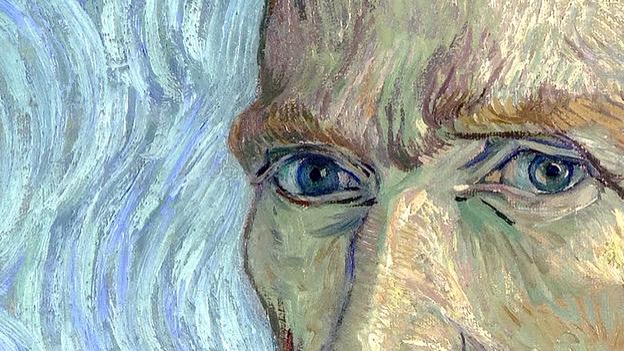
In 1878 Van Gogh was a struggling would-be preacher. At his lowest ebb, he began to draw. Alastair Sooke looks back at this pivotal moment in history.
In the spring of 1878, Vincent van Gogh turned 25. As he looked back over his short life, the Dutchman found little to celebrate among the meagre endeavours of his faltering career. By conventional, middle-class standards, he was a failure.
A stint working for an art dealership first in The Hague then in London and Paris hadn’t worked out: shy and awkward, he didn’t take to the profession, and in 1876, he was fired. That was followed by a couple of dead-end teaching jobs in England, as well as a short, forgettable spell working in a bookshop in Dordrecht, before he moved to Amsterdam to become a minister of religion, following in his father’s footsteps.
However, he didn’t have the patience or rigour to master the necessary study, so in 1878 – a few months after his 25th birthday – he left for Brussels, in order to enrol in a swifter training school for evangelists. Even this, though, was beyond him. After a three-month trial period in which his performance was less than mediocre, he was told that he would not be admitted to the course.
By now, Van Gogh’s family was beginning to despair. He had not curbed his socially inept and awkward manner, which was exacerbated by an eccentric tendency to dress in a deliberately unkempt fashion. How could an oddball like Vincent ever hope to scrape a living? His father was beginning to wonder whether his eldest son should be admitted to a mental hospital.
Van Gogh, though, was still fired with religious zeal and remained adamant that he could find work as an evangelist. At the end of 1878, he set off for the depressed coalmining district of the Borinage to the west of the city of Mons in Belgium, determined to establish himself as a lay preacher to the working
As a new exhibition, Van Gogh in the Borinage, at BAM (Beaux-Arts Mons) documents, he stayed in the region until October 1880, when he returned to Brussels. (Mons is one of the European capitals of culture for 2015.) Although ultimately his ambitions to become an evangelist would be thwarted – things got so bad that at one point his sister suggested that he should re-train as a baker – the Borinage was the making of Van Gogh in one fundamental respect. It was here, encouraged by his gentle brother Theo, that he decided to become an artist.
The startling thing is that his experiences in the Borinage seem to have set the template for many subjects and motifs that would continue to fascinate him as an artist over the next decade, until his death from a self-inflicted gunshot wound to the chest in the summer of 1890.
True to form, life for Van Gogh in the Borinage was not straightforward. He lived in a humble hut, gave away much of his money, and swapped his smart clothes for the practical work-wear of the ‘Borins’. Unfortunately, he was not a gifted orator, so his meetings were sparsely attended. His inability to connect with the local coalminers was compounded by a practical, linguistic difficulty: he couldn’t make head or tail of their quick-fire patois known as ‘Walloon French’, while they were mystified by his own attempts at French, which to their ears sounded overly formal and fussy. In July 1879, only half a year after he had arrived in the region, he received another setback: the authorities terminated his trial appointment as an evangelist, precipitating a crisis of self-doubt.
Billionaires Chasing Warhols Fuel $16 Billion Art Sales
“Billionaires Chasing Warhols Fuel $16 Billion Art Sales”
by Mary Romano via “Bloombergs“

Andy Warhol was the top-selling artist at auction in the past year as increased competition for the most-expensive segment of the market drove global art sales higher.
Collectors bought 1,295 works by the deceased artist totaling $653.2 million, ahead of sales for Pablo Picasso andFrancis Bacon, according to preliminary figures by New York-based researcherArtnet. Auctions worldwide rose 10 percent to $16 billion.
Art sales have more than doubled from $6.3 billion in 2009, as surging financial markets lifted the fortunes of the world’s richest. The top 400 billionaires added $92 billion in wealth this year, for a net worth of $4.1 trillion as of Dec. 29, according to the Bloomberg Billionaires Index. Bidding for the most coveted artists has been driving much of the surge in auctions, said Jeff Rabin, a principal at advisory firm Artvest Partners in New York.
“The headline number is not so much a comment on the art market as it is on global wealth,” Rabin said. “We haven’t seen a considerable increase in the number of objects sold. We have seen price appreciation at the top end.”
A record $2.3 billion of art was auctioned over two weeks in New York in November. As part of those auctions, Christie’s on Nov. 12 sold 75 contemporary works for $852.9 million, a record for an evening auction.
“That total in one evening sale for less than 100 works is extraordinary,” Rabin said.
No Women
At $16 billion, this year’s art sales would be the second-highest on record. The Artnet numbers for 2014 are preliminary, and final figures next week could still surpass the previous record of $16.3 billion, set in 2011. The figures take into account sales of paintings, drawings and sculpture but not other collectibles such as furniture or decorative objects. The numbers also don’t include private sales.
No women were among the top 10 artists in 2014, and only one, Gerhard Richter, 82, is still living.
Warhol, who died in 1987, had two of the most expensive works at auction in 2014. “Triple Elvis,” a 1963 silkscreen of Elvis Presley in a publicity image for the movie “Flaming Star” in which the singer is shown as a cowboy with a gun, sold for $81.9 million.
“Four Marlons,” a 1966 canvas depicting four identical images of a young Marlon Brando wearing a leather jacket and a cap in a still from the movie “The Wild One,” fetched $69.6 million. Both works were sold in November at Christie’s in New York.
Chinese Artists
Picasso was the second-biggest selling artist, with 2,820 of his works fetching $448.7 million. Although he didn’t have an individual work among the top sellers, collectors sought out the artist because he had “an incredible body of work and multiple periods of exceptional work,” Rabin said.
Bacon, Richter and Mark Rothko rounded out the top five artists. Two Chinese artists, Qi Baishi, known for painting shrimp, fish and frogs, and Zhang Daqian, who was famous for his landscapes, ranked sixth and ninth, respectively. Claude Monet was seventh, with $252.1 million of his works sold. Jean-Michel Basquiat was 10th, at $172.2 million. . . .
READ MORE
Coming Exhibition: Future Returns
“Future Returns: Contemporary Art from China”

Who:
Eli and Edythe Broad Art Museum
Michigan State University
When: Oct. 28, 2014 – March 8, 2015 (Hours Vary)
Where:
Eli and Edythe Broad Art Museum
547 East Circle Drive
East Lansing, Michigan 48824
More Information: Here and Here.
Over the past three decades China has experienced profound socioeconomic changes that have prompted calls to revisit, reconsider, and redefine the nation’s identity. Although there remains a strong local understanding of Chinese history and heritage, the homogenization of the country’s urban geography and the rapid dissipation of rural life have dramatically altered the cultural landscape. Future Returns: Contemporary Art from China explores the impact of these transformations by bringing together works by contemporary Chinese artists that address China’s metamorphosis from a traditional society into an ultra-modern nation-state.
The pertinent question in today’s China is whether the country’s distinct traditions and values can continue to play a role in its development. The future of China cannot be predicted, yet the psychology of “change, change, change” that pervades the everyday lives of the Chinese allows for a multitude of possibilities. Only in the pursuit of these new potentialities will China be able to build on its distinctive culture. The focused selection of paintings, photographs, installations, and digital art in this exhibition showcases the vision of both emergent and established practitioners who have contributed to China’s celebrated artistic community. Through their works, Future Returns highlights the emergence of a new China, one that is not constrained by closed readings of the past.
Artists and filmmakers featured in the exhibition include: Chen Weiqun, Dong Jun, Geng Yi, He Yunchang, Jiang Ji An, Jin Yangping, Jizi, Li Junhu, Lin Xin, Liu Lining, Meng Baishen, Miao Xiaochun, Pei Li, Qu Yan, Sui Jianguo, Su Xinping, Tian Bo, Wang Chuan, Wang Huangsheng, Wang Yang, Xia Xiaowan, Xu Bing, Zhang Yanfeng, Zhou Gang, and Zhou Qinshan.
Art I Love ~ At the Balcony

“At the Balcony” by Pino Daeni
 The Cultured Muse