Culture

Discovery of the World’s Oldest Tea

Archaeologists have discovered a huge stash of the oldest tea in the world buried in the tomb of an ancient Chinese emperor. The tea (pictured right) was badly decomposed, but analysis showed only the finest tips (bottom left) had been picked and buried with the emperor. Similar tea was found in a tomb in Tibet (top left) Archaeologists have uncovered the world’s oldest set of tea leaves from the tomb of an ancient Chinese emperor! 

 Living 2,150 years ago in the Western Han Dynasty, Emperor Jing was a major fan of the delicious drink.  Like all the rest of us tea lovers, Emperor Jing understood the power of the tea leaf and its healing/renewing abilities.  

The collection of tea leaves was 42 feet x 8 inches. That is a major tea haul! If you ever tried drinking tea from leaves rather than a lipton bag, you’ll know that it only takes a small amount to go a long way. This amount probably lasted him a long while in the afterworld!  

This particular type of tea, Camellia Sinesis, comes from a type of small evergreen shrub known as a tea tree. The leaves and buds of the tree are used to create a special, expensive green tea.  There are actually two varieties of the tree–one is used to create the Chinese teas (such as White Tea, Oolong, Pu’er, Green Tea, etc.) and the other is used to create Indian Assam teas. The leaves of the tree have long been applied in Chinese traditional medications and as a caffeine provider.  I’m guessing it was pretty easy to bring the emperor over as a tea supporter 🙂

The tomb was located in Xi’an, China. Xi’an is now world-famous due to the discovery of the Terra Cotta army buried under the local hills and is only about an 8 hour drive from where I live!  I’m really excited; maybe I could see this tea pile 🙂 Emperor Jing’s tomb contained “50,000” terra cotta animals and statues, along with other great treasures.

The extra amazing thing about the tea beyond its age is the fact that it is some of the earliest proof that researchers have about the Silk Road.  It is believed that the emperor may have traded his tea with Tibet where similar tea remains were found dating not long after.  This shows the the Silk Road probably moved thorugh Tibet at the time.  

Resources:
  1. Daily Mail
  2. Medicine.Net
  3. Wikipedia (Don’t Shoot Me)

Angel City Chorale ~ “Africa”

The beginning is a really amazing twist on the traditional song.  I love it when people use nature to replicate nature.  🙂

Lights in the Shadows

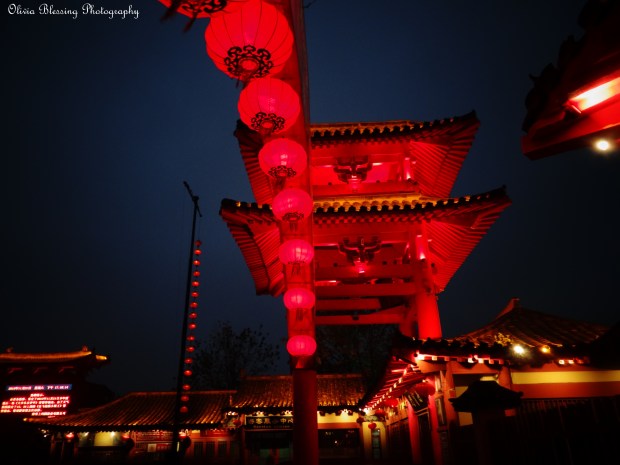
China.jpg

Traditional Village in Kaifeng, lighting the classic Chinese lanterns at night to guide the way.

Colombian carnival meets Korean folk art

Colombian carnival meets Korean folk art”

via “The Korean Herald

Colombian pair of traditional artists visited Korea A in September to showcase the country’s carnival music and dance and engage in a cultural exchange with Korean artists. Dancer and researcher Maribel Egea Garia and instrumentalist and professor Jarry Jose Julio Arjona came to Korea on Sept.At the request of the Colombian Embassy 8, and performed at schools and events across the country.They also took lessons on traditional Korean music and dance, provided by the Korean Classical Music Corporation.

Both are natives of Barranquilla, a city in northern Colombia by the Caribbean Sea that is famous for its carnival in February. The four-day festival is considered one of Latin America’s three major carnivals, along with those of Rio de Janeiro and Miami. Declared a National Cultural Heritage by the Congress of Colombia in 2001 and recognized by UNESCO in 2003, the event has become a universalby incorporating cultural influences over waves of celebration the years. “The carnival is a cultural melting pot, mixing the legacies of Spanish colonialists, African slaves and their accompanying South American natives,” Garia told The Korea Herald. “It passionately fuses the different elements, which manifest themselves in characteristic ways during the festivity.” As various ethnicities and groups live harmoniously in Colombia, no apparent tensions or conflicts exist between them, Arjona said. People the PREPARE for the event for weeks or months on end, depending on their roles, he said, with the exception of few native tribes who live deep in the forests in the Sierra Nevada de Santa Marta region – the Kogis, Arawakas and Wayuus. “They have the Colombian national identity in their heart, but been largely outliers to the event due to their culturally indigenous ways of life.” According to Garia, the carnival originated from cultures surrounding the Caribbean Sea. The most famous dance is “la cumbia,” comprised of a pair of male and female dancers, the WHERE the man makes moves that resemble seducing his female partner, she said. Arjona said that spectators can “indirectly” participate from the side of the road , singing and dancing, taking photographs and interacting with other crowds, but can not jump into the carnival. Barranquilla lies next to the Magdalena River delta facing the Caribbean, and has served as a strategic port for the riverside and maritime industries. . . .

READ MORE


Juilliard School’s Tianjin campus to open in 2018

“Juilliard School’s Tianjin campus to open in 2018”

via “Xinhua.net

BEIJING, Oct. 5 (Xinhuanet) — New York’s renowned Juilliard School will launch its first overseas campus to offer graduate courses in music in the northern Chinese municipality of Tianjin by 2018.

Sources with the administrative commission of Tianjin Binhai New District said on Friday that the Juilliard School’s Tianjin branch will be established in Yujiapu Financial District.

Approved by the Chinese Ministry of Education, the school’s branch in Tianjin will collaborate with the Tianjin Conservatory of Music as well as the Tianjin Innovative Finance Investment Co. Ltd. and the Tianjin Municipal Education Commission to offer graduate courses in music.

The master’s degree to be awarded by the Juilliard school’s Tianjin branch will be accredited in the United States. The partnership will be the first such collaboration between Chinese and foreign conservatories.

Chinese First Lady Peng Liyuan accompanied Chinese President Xi Jinping on a state visit to the United States and on Monday visited the Juilliard School at its Lincoln Center campus, where she attended a performance class and the inauguration of the school’s branch at the Tianjin Conservatory of Music.

She encouraged students from both countries to learn from and communicate more with each other.

The Juilliard School was founded in 1905, and its alumni have collectively won more than 105 Grammy Awards, 62 Tony Awards and 47 Emmy Awards.

Yujiapu Financial District, where Juilliard’s branch will be established in Tianjin, has been approved to use 3.86 square km of land. The municipal government hopes to turn the area into a world-class financial center within 10 years. . . . .

READ MORE