Middle East

Red Sea: Archaeologists Discover Remains of Egyptian Army From the Biblical Exodus

“Red Sea: Archaeologists Discover Remains of Egyptian Army From the Biblical Exodus “

via “World News Daily Report

divers

Suez| Egypt’s Antiquities Ministry announced this morning that a team of underwater archaeologists had discovered that remains of a large Egyptian army from the 14th century BC, at the bottom of the Gulf of Suez, 1.5 kilometers offshore from the modern city of  Ras Gharib. The team was searching for the remains of ancient ships and artefacts related to Stone Age and Bronze Age trade in the Red Sea area, when they stumbled upon a gigantic mass of human bones darkened by age. 

The scientists lead by Professor Abdel Muhammad Gader and associated with Cairo University’s Faculty of Archaeology, have already recovered a total of more than 400 different skeletons, as well as hundreds of weapons and pieces of armor, also the remains of two war chariots, scattered over an area of approximately 200 square meters. They estimate that more than 5000 other bodies could be dispersed over a wider area, suggesting that an army of large size who have perished on the site. . . . .

READ MORE

Islamic State Raids Biblical City of Ninevah, Sells Ancient Treasures For Millions

Islamic State Raids Biblical City of Ninevah, Sells Ancient Treasures For Millions

by Thomas D. Williams via “Breitbart

The sale of archaeological treasures from the Biblical city of Nineveh and the surrounding territory is becoming one of the main sources of funding of the Islamic State in Kurdistan as well as in Syria, according to reports by the Italian newspaper Corriere della Sera.

A USB stick recovered from an Islamic State militant by Iraqi intelligence in August documents the value of revenues on the black market at $32 million. Among the items for sale: hundreds of headstones, inscriptions, mosaics, and adornments.

According to Qais Hussein Rasheed, head of the state-run Museums Department in Iraq, black market dealers are entering areas under Islamic State control to buy these items.

In their zeal to destroy what they consider to be heresy, Islamic State militants have demolished many artifacts but they are cashing in at the same time, extracting valuable relics to sell on the international black market.

Profiting from religious artifacts represents a curious double game. On the one hand, the precepts of Wahhabism, a fundamentalist Islamic sect, require the destruction of every object of worship not directed to Allah. This has justified the demolition of churches, mosques, and tombs, and has been carried out with maximum media exposure.

On the other hand—this time without advertising it—the same IS leaders are now either selling artifacts directly or granting access to occupied archeological zones to teams of professional looters. They then split the revenues from the plunder according to the Islamic law of Khums: a fifth of the spoils must be paid to God, ie, the Islamic state.

The Turkish border is only a few hours away with Western brokers waiting to transfer the artifacts to the major black art markets: London, New York, and Tokyo. . . . .

READ MORE

Coming Exhibition: Abu Dhabi Art Fair

“Abu Dhabi Art Fair”

New Section for Abu Dhabi Art - Artists' Waves

Who:  Abu Dhabi Art 

When: Nov. 5, 2015 – Nov. 8, 2014 (View Hours Here)

Where: 

Saadiyat Island
UAE Pavillion
PO BOX 126888 Abu Dhabi
UAE – Abu Dhabi
United Arab Emirates
+971 2 657 5800

How Much:  (View Pricing Here)

More Information: Here

“Abu Dhabi Art presents museum quality artworks from modern, contemporary and design galleries. This year it includes a wide spectrum of installations and large-scale sculptures, as well as a new section titled Artists’ Waves that places the discovery and re-discovery of artists at the core of Abu Dhabi Art, through a curated exhibition.”


“Archaeologists Train “Monuments Men” to Save Syria’s Past”

“Archaeologists Train “Monuments Men” to Save Syria’s Past”

by Andrew Curry via “National Geographic

Amid the devastation and danger of civil war, Syrian archaeologists and activists are risking their lives in the battle against looting. . . .

Photo of Free Syrian Army fighters walking with their weapons in the Umayyad mosque of Old Aleppo.

The ancient city of Dura-Europos sits on a bluff above the Tigris River a few miles from Syria’s border with Iraq, its mud-brick walls facing a bleak expanse of desert. Just a year ago the city’s precise grid of streets—laid down by Greek and Roman residents 2,000 years ago—was largely intact. Temples, houses, and a substantial Roman outpost were preserved for centuries by the desert sands.

“It stood out for its remarkable preservation,” saysSimon James, an archaeologist at the U.K.’s University of Leicester who spent years studying the site’s Roman garrison. “Until now.” (See before and after pictures of archaeological site looting.)

Satellite images of the site released by the U.S. State Department in June show a shocking picture of devastation. In the past year, as fighting continued to rage between the government of President Bashar al Assad’s troops and rebels—including the Islamic State in Iraq and Syria—the site has been ravaged by industrial-scale looting.

Photo of the Umayyad Mosque of Aleppo in 2009.

Aleppo’s Umayyad Mosque is seen here in 2009, before being damaged in the civil unrest.
PHOTOGRAPH BY BRYAN DENTON, CORBIS

“It’s a lunar landscape of spoil heaps,” says James. “Obviously, the looters were bankrolled to a massive extent to do something like this.”

It may be too late to save Dura-Europos, but archaeologists and activists are scrambling to preserve what’s left of Syria’s rich history, which stretches back more than 10,000 years. The efforts are focused on training locals to save ancient monuments and museum collections in the midst of a war zone.

Organizations including the University of Pennsylvania’s Cultural Heritage Center, the International Council on Monuments and Sites (ICOMOS), and Heritage for Peace, a network of volunteers and activists based in Spain, have been holding workshops to train Syrian archaeologists, curators, and activists in “first aid for objects and sites,” says Emma Cunliffe, a consultant specializing in heritage protection during conflicts.  . . .”

READ MORE

Kingdom, First Among Arab Countries To Set Up Monuments System

Kingdom, First Among Arab Countries To Set Up Monuments System

via “Arab News

history

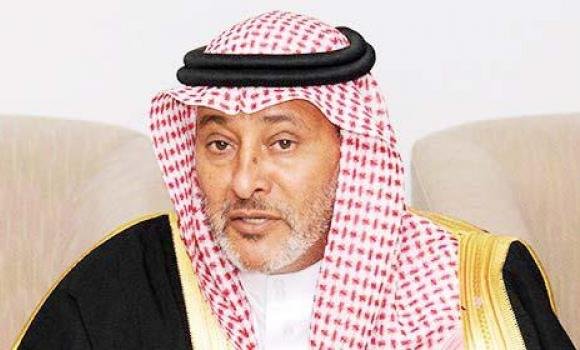
 General Supervisor of King Abdullah Cultural Heritage Project and vice president of the Saudi Commission for Tourism and Antiquities (SCTA) Ali Al Ghabban said Saudi Arabia is one of the first Arab countries to set up a monuments system with the aim to protect the heritage sites in the Kingdom for their cultural significance and their value as an economic resource.

“Saudi Arabia is one of the first Arab countries to set up a system for monuments,” Al Ghabban said in a press statement issued yesterday.

Applauding the issuance of the new system of monuments, museums and architectural heritage which was issued by the Council of Ministers recently, Al Ghabban asserted that the new system of monuments enhances the protection of national heritage sites as resources for economic benefit.

He added that the former system was issued 40 years ago but it was necessary to effect some changes in light of an evolution in the government’s interest in preserving architectural and urban heritage including museums to develop a system for the protection of monuments.

He revealed that the new system had been under study for a long time with concerned partners prior to being released with requirements which would enhance the process of preservation, protection and investment.

“The new system focuses on the importance of monuments, their preservation and as an important area of investment to benefit the country’s economy,” Al Ghabban underlined.

He further said the new system devotes a special chapter to urban heritage and museums and takes care of investment in national heritage. It also ensures economical benefits with regard to the sunken monuments and seeks cooperation from scientific missions, exploration operations and archaeological surveys to cope with new developments.

It further classified the architectural heritage, which is recorded as a national heritage with various categories and also supports the creation of a fund to support urban and general heritage, the SCTA deputy said.

“All of these combine to make the new system an important step toward the protection and development of the national heritage and culture,” Al Ghabban asserted.

According to him, the important additions of the new system are in the area of protection where government agencies including the ministries of Municipal and Rural Affairs, Agriculture, Transport, Petroleum and Mineral Resources and other agencies are obliged to operate in locations that are earmarked for developmental projects to ensure there are no sunken or visible monuments there.

READ MORE