Outrage in China Over Replicas of Its Own Historic Sites

“Outrage in China Over Replicas of Its Own Historic Sites”

by Laura C. Mallonee
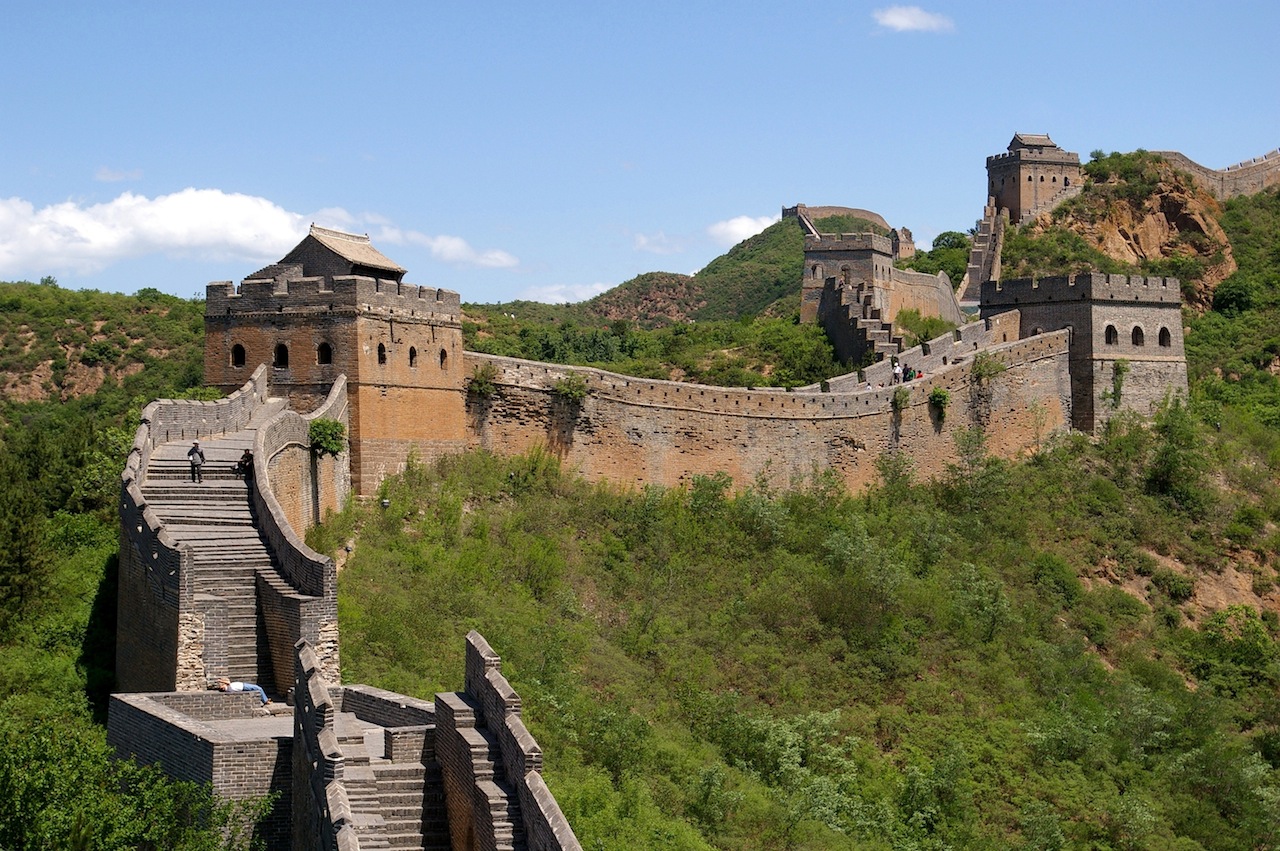
20090529_Great_Wall_8185

Controversy has erupted over two replicas of important heritage sites in China, a country famous for its many reproductions of other nations’ famous structures.

In Hubei province, the Wuhan Institute of Biogengineering has nearly finished its fake version of the Great Wall of China. In Zhejiang province, Hengdian World Studios will soon complete a duplicate of Beijing’s Old Summer Palace at its headquarters, where it has already built copies of the Forbidden City and the Tiananmen Gate.

The replicas are in keeping with the country’s tradition of xeroxing international landmarks. Visitors to the city of Chongqing can snap their photographs in front of Mount Rushmore. In Hangzhou, they can climb the Eiffel Tower and stroll along the Champs-Élysées. The town of Suzhou alone contains 56 such reconstructions, including London’s Tower Bridge, the Sydney Harbour Bridge, and the Pont Alexandre III in Paris.

But now simulations of Chinese cultural heritage are being challenged for varying reasons. According to The Telegraph, social media users have been ridiculing the $650,000 cost of recreating the Great Wall, a mile-long, gray brick replica that will open in September. The original, built between 250 BCE and the 17th century, lies nearly 800 miles to the north.

“The idea of a university is to educate people and not to build tourist spots,” a user on Weibo (China’s Twitter knock-off) wrote. Another quipped: “I can’t believe a university has such a low IQ.”

Ruins_of_Dashuifa_20130126

The $5 billion replica of the Old Summer Palace, parts of which will open to tourists in May, has also drawn criticism, as The Art Newspaper reported. The original was built by the Qing Dynasty in the 18th century, then ransacked by French and British soldiers in 1860 during the Second Opium War. “I think they shouldn’t rebuild it,” a Weibo user wrote. “That history is written in blood. A dilapidated Yuanmingyuan is better able to remind us of that humiliating chapter of history.”

The administration of the original palace’s ruins is threatening to sue the film studio for violation of intellectual property rights. It told Xinhua News Agency — China’s state media arm — that the structure is “unique and cannot be replicated. The construction and development of the site should be planned by authoritative national organizations, and any replication of it should reach certain standards.” . . . .

Read More

History in shambles: World Heritage sites after the Nepal earthquake

“History in shambles: World Heritage sites after the Nepal earthquake”

by Brian Ries via “Mashable

Kathmandu1

History in shambles: World Heritage sites after the Nepal earthquake

A handout photo provided by the International Federation of the Red Cross (IFRC) on 26 April 2015 of rescue workers sifting the ruins of a building for possible survivors in Kathmandu, Nepal, 25 April 2015.

Kathmandu1

The centuries-old monuments spread throughout the Kathmandu Valley were heavily damaged in the massive earthquake that struck Nepal on Saturday, a United Nations official said on Monday. Some of the sites suffered “extensive and irreversible damage.”

Irina Bokova, director-general of the United Nations Educational, Scientific and Cultural Organization (UNESCO), said she was “shocked” by the earthquake’s devastating impact on Nepal’s cultural heritage in the country, in particular the “extensive and irreversible damage at the World Heritage site of Kathmandu Valley.”

UNESCO Site
A photo shows devastation at the World Heritage site in Kathmandu after a earthquake toppled monuments and temples on April 25, 2015.

The sites are made up of seven separate groups of monuments. They include the Durbar Squares of Hanuman Dhoka (Kathmandu), Patan and Bhaktapur, the Buddhist “stupas” of Swayambhu and Bauddhanath and the Hindu temples of Pashupati and Changu Narayan.

The Nepalese government describes the seven sites as “medieval royal palace complexes” or “religious temple complexes,” calling them “archaeologically, historically, culturally and religiously very important” to the Kathmandu Valley.

The Kathmandu Valley was removed from the UN’s list of World Heritage in Danger in 2007, and the government has undertaken a series of conservation efforts to protect them from encroaching development since then.

Three of the sites were “almost fully destroyed”

According to a preliminary assessment done by the organization, the Durbar Squares of Patan, Hanuman Dhoka (Kathmandu) and Bhaktapur, were “almost fully destroyed” in the earthquake.

Basantapur Durbar Square
A general view of the Basantapur Durbar Square that was damaged in Saturday’s earthquake in Kathmandu, Nepal, Sunday, April 26, 2015.

Some of that destruction was captured by Kishor Rana, who flew a drone above the sites in the hours after the earthquake struck.

 “These are desperate times but we must all unite together in times like these,” said Kishor Rana on Facebook, who has pledged to shoot more of the sites. “Out of respect to the victims family, I did not take footages of live rescues taking place. We not only lost many lives and homes but we lost many pieces of our cultural heritage, our history.”

READ MORE

Protecting Indian Culture Need Of the Hour: Guv

“Protecting Indian Culture Need Of the Hour: Guv”

via “Express News Service

Governor Vajubhai Vala and Infosys Foundation chairperson Sudha Murty presenting the Rama Gana Kalacharya Award to instrumentalist Pandit Vishwa Mohan Bhat on Sunday | express photo

BENGALURU: Governor Vajubhai Rudabhai Vala has called for protecting Indian culture, which he said is the only way to achieve progress.

Speaking at the Rama Gana Kalacharya Award programme here on Sunday, he said, “No country can ever make progress if its culture cannot be protected. This is imperative and the need of the hour.”

He said the Mughals and the British, who once ruled the country, tried to destroy Indian culture. “However, we have prevailed and our culture is still rich.”

Vala also rued that the youth these days hardly have any cultural knowledge. “Understanding of one’s culture must be inculcated from a young age. However, the youth these days hardly have any knowledge. This is bad,” he added.

The Rama Gana Kalacharya Award  was presented to Hindustani classical music instrumentalist Pandit Vishwa Mohan Bhat.

READ MORE

Korean culture conference makes Japan debut

“Korean culture conference makes Japan debut”

via “Korea JoongAng Daily”

When you’re into a person, you’re naturally drawn to discovering his or her most intimate details.

The same goes for fans of K-pop stars.

Followers of these celebrities want more than to simply see their favorite singers perform at concerts or act on screen. They want to get to know them personally – finding out about the clothes they wear, the makeup they use, the food they eat, how they eat it and where they hang out.

Essentially, that’s what KCON, one of Korea’s largest conventions on so-called K-culture, hopes to provide. The event is organized by CJ E&M, also known as CJ Entertainment, the showbiz affiliate of CJ Group.

The annual convention, which concludes with a large-scale K-pop concert, began in 2012 in Los Angeles, a city with a large population of Koreans.

CJ Group executives, including Chairman Lee Jay-Hyun, has said on numerous occasions that the company’s goal is to make people around the world watch two or three Korean films a year; eat Korean food once or twice a month; watch one or two Korean dramas a week; and listen to Korean music every day. CJ has film, food, restaurants, retail and logistics businesses, among others.

One of the conventions will be held in Japan for the first time this year. KCON 2015 Japan will start on April 22 at Saitama Super Arena in Saitama amid soured bilateral ties between Seoul and Tokyo due to intensified historical and territorial disputes.

Why Japan and why now?

The word “CON” in KCON stands for three things – convention, concert and cultural content – three things visitors can experience at the event.

“In order to increase KCON’s presence in 2015, we’ve added more destinations,” CJ E&M said through a press release. “Besides Los Angeles, where it has been held every year, we’ve added the east side of the U.S. as well as Japan. A total of three KCONs will be held this year.”

CJ E&M chose to hold a KCON in Japan as it has hosted the “M Countdown” K-pop concert in the nation around this time most years anyway and because it is where Hallyu, or the popularity of Korean pop culture abroad, began more than a decade ago. . . .

READ MORE

Royal rickshaw comes home, to be displayed in central Vietnam

“Royal rickshaw comes home, to be displayed in central Vietnam”

via “Tuoi Tre News”

A rickshaw which belonged to a king of the Nguyen Dynasty (1802-1945), Vietnam’s last monarchy, has finally arrived home after some 100 years being away and will be put on display in the central region next week as a happy ending for insiders’ unprecedentedly concerted efforts.

The rickshaw, which was gifted by King Thanh Thai (1879-1954), the 10th king of the Nguyen Dynasty, to his mother during his lifetime, is considered a royal treasure which is highly cherished for its technical, aesthetic, cultural, and historical value.

The prized item was custom-made from “trac” wood encrusted with conch and boasts sophisticated carvings.

The rickshaw will be displayed at an exhibition, which is poised to run on Wednesday at Dien Tho Palace, part of the UNESCO-recognized Complex of Monuments in Hue City.

The palace is a prominent highlight in Hue, the capital city of the central province of Thua Thien-Hue.

The homecoming is the fruit of Vietnamese culture authorities’ campaign, with the leader of a Paris-based museum giving up its legal right to purchase the object and fund-raising efforts.

At an auction in Tours, France on June 13, 2014 of various treasured items, including King Thanh Thai’s rickshaw, Vietnam’s people won the bid for the vehicle for €45,000. The item fetched €55,800 including organization fees.

In an unexpected twist, Katia Mollet, a curator of the Guimet Museum, declared that France had the right to buy the rickshaw for the same price.

State-run organizations in France were entitled by law to purchase the items at the same price as that offered by the auction winners.

The Vietnam Embassy in France and Vietnamese culture authorities persevered in talking the French museum’s leader out of the intention, and sought for support from French cultural agencies and experts on Vietnamese culture for Vietnam’s bid to purchase the rickshaw.

Some days following the auction, the Guimet Museum, which is well known for its painstaking conservation of a number of Vietnamese artifacts and has helped promote them through its exhibits, gave up its right to buy the rickshaw.

Buu Y, a respected culture researcher in Hue, was taken aback by the full-length details of King Thanh Thai’s rickshaw in a record kept by the French auction company.

According to the auctioning record, the king sold his rickshaw and bed – another royal treasure – to Prosper Jourdan, head of the king’s escort team, who took it to France in 1907.

The rickshaw has seen repairs to and restoration of some of its parts since, the record added.

Jourdan’s heirs later decided to put these two invaluable items up for auction and expressed their wish that after the auction, they will be displayed in Hue, which was Vietnam’s imperial capital during the Nguyen Dynasty. . . .

READ MORE