Europe

Current Exhibition: “Museum of Russian Icons Peeks into Romanov Cupboards”

“Museum of Russian Icons Peeks into Romanov Cupboards”

by Sebastian Smee via “Boston Globe”

Cigar case made between 1908-16 by Fedor Ruckert for Fabergé.

WHAT:

“The Tsar’s Cabinet: Two Hundred Years of Russian Decorative Arts Under the Romanovs”

WHERE:

“Museum of Russian Icons.”
203 Union St.
Clinton, MA 01510
 
Hours: 
Tues.-Fri. ~ 11:00 a.m. – 3:00 p.m.
Sat. ~ 9:00 a.m. – 3:00 p.m.

WHEN:

March 27, 2014 – May 24, 2014

HOW MUCH:

Generally:
Adults: $9
Seniors: $5
Students: $2
Children: $2
Children (under 3): Free
Special Free Admission: Varies, for more details, see here.
 

DETAILS:

“CLINTON — The romance of the Romanov dynasty — in odor so like certain over-evolved orchids — has been affiliated, aptly enough, with fragile accessories forever. One thinks, above all, of the products of the House of Fabergé, but more generally of the decorative arts (particularly porcelain) produced specifically for the Romanovs between the 18th and early 20th centuries, when the dynasty came to its bloody and unambiguous end.

The Museum of Russian Icons in Clinton is currently hosting a show called “The Tsar’s Cabinet: Two Hundred Years of Russian Decorative Arts Under the Romanovs” that’s filled with porcelain, as well as glass, lacquer, enamel, and other luxury materials.

Drawn from the private collection of consultant Kathleen Durdin (who, according to a biographical note in the show’s catalog, used to collect magazine advertisements that featured the Forbes Fabergé collection), the show summons the rich history of Romanov rule.

It comes to Clinton at the end of a five-venue tour of Canada and the United States. It was organized by the Muscarelle Museum of Art, which is on the campus of the College of William & Mary, Williamsburg, Va., in collaboration with International Arts and Artists, a nonprofit based in Washington, D.C. . . . .

READ MORE


I want one: Sundial Ring

10153790_777991292219121_3218807424804518103_n

A rare 16th century gold sundial and compass ring, possibly German, circa 1570. The hinged oval bezel designed as a seal and engraved with a coat of arms, opening to reveal a sundial and compass, on a plain gold hoop. . . .

via “Musetouch Visual Arts Magazine

“Cornelius Gurlitt and the complexities of rehoming Nazi-looted art”

“Cornelius Gurlitt and the complexities of rehoming Nazi-looted art”

by Rita Lobo via “European CEO

A priceless haul of invaluable art thought to have been destroyed by the Nazi’s has recently been uncovered in Germany, raising questions about if and how artefacts are returned to their rightful owners or their heirs

“A priceless haul of invaluable art thought to have been destroyed by the Nazi’s has recently been uncovered in Germany, raising questions about if and how artefacts are returned to their rightful owners or their heirs

When the Bavarian customs officer searched Cornelius Gurlitt aboard a train crossing the Lindau Border in 2010, he had no way of knowing that he was about to reignite one of the fiercest cultural debates in European history. Gurlitt, the son of an important German art curator during World War II, turned out to be sitting on a veritable trove of priceless works of art thought to have been lost during or shortly after the war – a fact only discovered because police raided his home on suspicions of tax evasion.

An elderly recluse living in an affluent neighbourhood of Munich, Gurlitt had inherited from his father, Hildebrand, over 1,200 pieces the curator had acquired during the war. The story of how Hildebrand Gurlitt came to be in possession of such an array of what the Nazi’s had labelled ‘degenerate art’ – during a time when collectors were fleeing Europe in droves – is murky at best. But because Germany does not have a law preventing anyone or any institutions from owning looted art, it is unlikely that the provenance of Gurlitt’s collection matters very much, should he wish to retain it.

There is no evidence that Hildebrand, who was part Jewish, stole any . . . .”

READ MORE

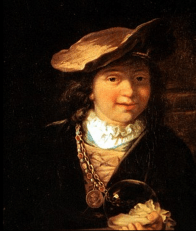
“French police recover painting by Rembrandt (or in the style of Rembrandt) stolen in 1999 from the municipal museum in Draguignan”

French police recover painting by Rembrandt (or in the style of Rembrandt) stolen in 1999 from the municipal museum in Draguignan

Via ArtCrime.Blogspot

“Journalist Vincent Noce reports in the French newspaper, Liberation, that a Rembrandt painting stolen in 1999 has been recovered in Nice (“Un Rembrandt volé en 1999 e été retrouvé à nice, 19 March 2014) although the thieves may have discovered the work was not by the ‘genius from Amsterdam’.
Noce reported that Tuesday afternoon French police from the unit assigned to fighting trafficking in cultural goods (OCBC) arrested two men (ages 44 and 51 years old) for trying to sell a painting stolen 15 years ago from the municipal museum in Draguignan in southeastern France. The oil painting, measuring 60 cm by 50, is attributed to Rembrandt and known as “Child with a Soap Bubble”. According to Noce’s article, the recovered painting has an estimated value of 4 million euros (U.S. $5.56 million) — if it is indeed by the Dutch master and not by an artist inspired by Rembrandt. According to the article, the museum’s inventory shows that the painting was taken from the Château de Valbelle [now in ruins] in Tourves during the revolution in 1794. 
Sophie Legras, writing for L’Agence France-Presse (AFP) and published in Le Figaro, reports that judicial police in Nice helped the OCBC in recovering the painting . . . . .”

READ MORE

“Battles Loom Over Crimea’s Cultural Heritage”

“Battles Loom Over Crimea’s Cultural Heritage”

via Reuters

“YALTA, CRIMEA/KYIV — From the 16th-century Tatar Khans’ palace in Bakhchisaray to the former tsarist residence that hosted the World War II Yalta conference, Crimea’s heritage sites have become a source of bitter contention since Russia seized the region from Ukraine.
 
For Kyiv, which does not recognize Moscow’s annexation of Crimea, losing the cultural and historic legacy of the Black Sea peninsula would be another major blow and Ukraine is readying for long legal battles with Russia.
 
“We will never give up the valuable heritage in Crimea because that is the property of Ukraine,” the country’s prosecutor general, Oleh Makhnitsky, told Reuters on Wednesday.
 
Ukraine’s Culture Minister, Yevgen Nishchuk, said Kyiv was amending its laws to seek justice internationally should Russia start removing cultural goods from Crimea or take over formal supervision of the region’s heritage sites.
 
One exhibition, put together by five museums – including four in Crimea – and currently on display in Amsterdam, has already fallen hostage to the conflict over the region, the worst stand-off between Russia and the West since the Cold War.
 
Both Crimea’s pro-Russian authorities as well as Kyiv claim ownership of the exhibition, titled “Crimea – Gold and Secrets of the Black Sea”, which features golden artifacts and precious gems dating back to the fourth century BC.
 
The show is operated by the University of Amsterdam and spokesman Yasha Lange said a legal investigation was going on to determine to whom the collection should be returned after it closes at the end of August.
 
“The exhibition should return to Crimea,” said Valentina Mordvintseva, who works for Ukraine’s National Academy of Sciences in Crimea’s provincial capital of Simferopol and who helped Amsterdam’s Allard Pierson Museum set up the exhibit.
 
“So it has become a political issue,” she told Reuters. “If the things end up held in Kyiv, I think it would be bad for Ukraine itself because it would look like vengeance.”
 
She was referring to a March 16 referendum in Crimea, an impoverished region of two million with a narrow ethnic Russian majority, which yielded an overwhelming victory for those advocating a split from Ukraine to join Russia.
 
Kyiv and the West dismissed the hastily arranged vote as a sham but Moscow used it to justify formally incorporating Crimea on March 21.
 
Crimea has since then introduced the Russian ruble as its currency and switched to Moscow time, while Russian troops have taken over Ukrainian military bases, forcing Kyiv to pull out its soldiers with their families.
 
Tatars, Tsars and Stalin
 
Prosecutor Makhnitsky said the Justice Ministry in Kyiv was preparing to register lawsuits with international organizations to assert its rights to the historic and cultural sites in Crimea.
 
The ministry refused immediate comment on what exactly it plans to do, but any such endeavor is likely to be an uphill battle as Russia controls the region.
 
Underscoring how any efforts from Kyiv could face further obstacles, some directors of Crimea museums have welcomed unification with Russia in the hope it will lead to increased budget support from Moscow.
 
Valery Naumenko, director of a museum housed in the historic residence of the Crimean Khans in Bakhchisaray, complained that Kyiv had not allocated any funds for the upkeep of the palace, which is dominated by two slender minarets. (more…)