painting

Turkey: Church discovered in world’s biggest underground city in Nevşehir with never-before-seen frescos

“Turkey: Church discovered in world’s biggest underground city in Nevşehir with never-before-seen frescos”

by Matt Atherton via “IBT

Church fresco

An 1,500-year-old underground church has been discovered in Turkey with never-before-seen frescoes depicting Jesus and “bad souls being killed”. The church was found in the world’s largest known underground city in the Cappadocia region of central Turkey.

The frescoes have been described as depicting Jesus rising into the sky – known in Christianity as the Ascension – and the destroying of evil – known as the Last Judgement. The discovery of the church itself – which archaeologists suggest could be more than 1,500 years old – still has secrets to be revealed, as so far only the roof and uppermost part of the walls have been uncovered.

“Only a few of the paintings have been revealed,” said researcher Ali Aydin, who told the Hurriyet Daily News: “There are important paintings in the front part of the church showing the crucifixion of Jesus and his ascension to heaven. There are also frescoes showing the apostles, the saints and other prophets Moses and Elyesa.”

An urban housing project was taking place in the city of Nevşehir, where the church was found. It is part of a huge number of early dwellings, which form the largest known ancient underground city. The underground city itself was discovered in 2014, and around four miles of tunnels have been uncovered. The experts believe people lived here around 5,000 years ago.

Archaeologists have had to pause their excavations, however, as the winter humidity can damage the paintings. However, they have managed to reveal the ceiling of the structure which mainly sits underground, and were fascinated by the huge frescoes which can be found across the inside of the roof and top of the walls.

“We know that such frescoes have so far never been seen in any other church,” said Hasan Ünver, mayor of Nevşehir. “It was built underground and has original frescoes that have survived to this day. This place is even bigger than the other historical churches in Cappadocia.

“It is reported that some of the frescoes here are unique. There are exciting depictions like fish falling from the hand of Jesus Christ, him rising up into the sky, and the bad souls being killed. When the church is completely revealed, Cappadocia could become an even bigger pilgrimage center of Orthodoxy,.”

READ MORE

Art I Love ~ Woman Artist

woman_artist_by_alla_holod-d6jofkw“Woman Artist” by Vasylina

Art I Love ~ Street Art

#StreetArt:

Unique Exhibition Showcases Works of Central Asian Artists

“Unique Exhibition Showcases Works of Central Asian Artists”

by RUFIYA OSPANOVA via “The Astana Times

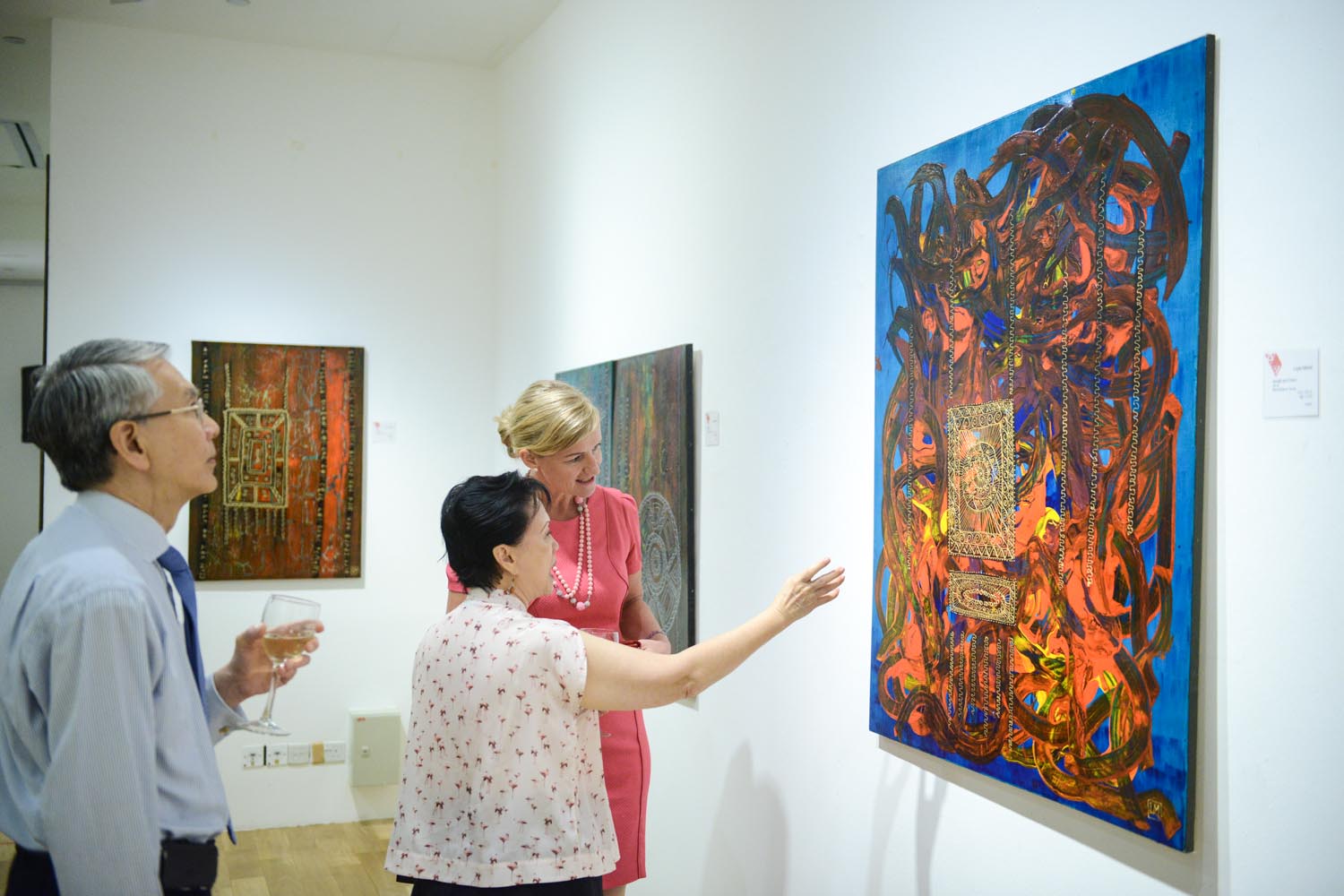
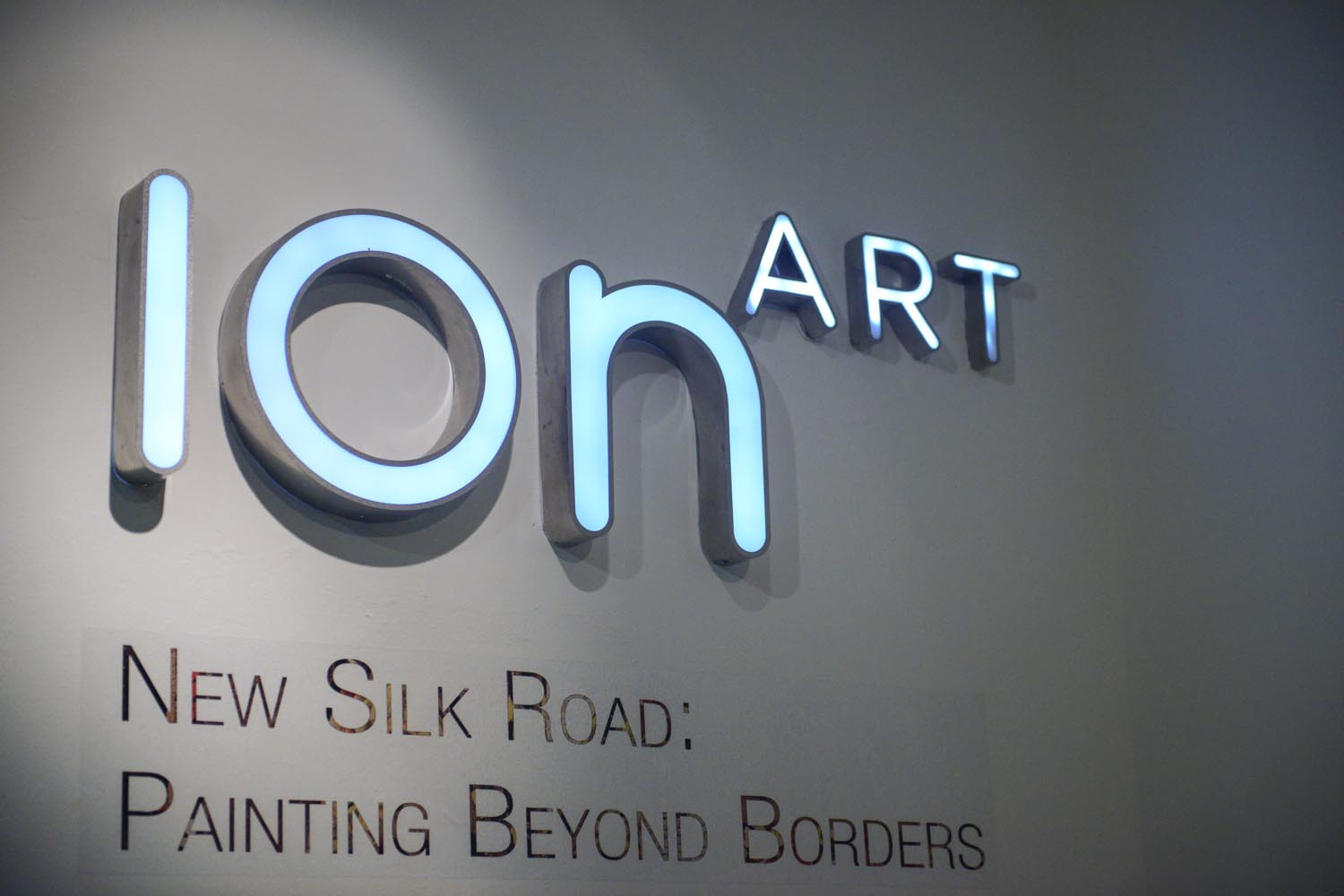
SINGAPORE – “New Silk Roads: Painting Beyond Borders,” the first exhibition of Central Asian artists, was showcased April 21 in Icon Gallery here. The event was organised by ENE Central Asian Arts with the support of the Kazakh Embassy in Singapore and Lassale Singapore University of Art.

BIL_3116

The exhibition showed 37 works, including those of artists from Kazakhstan, Turkmenistan and Uzbekistan. Paintings and abstract compositions by Central Asian artists generated great interest among the many visitors. 

Kazakhstan demonstrated paintings of the Amulet series by the nation’s renowned artist Leyla Mahat. In her works, Mahat tells about the role of amulets in the daily life of nomads, which were used not only as decoration but also as charms from the evil eye.

Amulet paintings recreate ancient jewellery uncovered in archaeological excavations and reconstructed by Kazakh scientists and her images relive the work of archaeologist Zeinolla Samashev. 

BIL_3029

Artist, archaeologist and artisan are all connected through the materiality of the gold ornaments and their contemporary artistic representations, as well as by the land once inhabited by the ancient peoples which now forms their burial place and the physical basis of the modern state. The choice of depicting jewellery, the wearing of which was an aristocratic prerogative, is also suggestive of the lineage which the artist claims as validation for the modern state. The appeals to the forces of history and heredity are perhaps nowhere better illustrated than in “Amulet and Colour” (2014), where their potency seems to glow red-hot, their vividness embodying itself in the profuse viscosity of paint, tactile and Medusa-like in its writhing. 

According to the organisers, such exhibitions in general allow representatives of Central Asian countries not only to learn more about the historical values of each other, but in particular help to strengthen ties between Kazakhstan and Singapore.  . . .

READ MORE

“Haystacks painting is officially declared a newly discovered Monet – but why did the Impressionist paint over his signature? “

“Haystacks painting is officially declared a newly discovered Monet – but why did the Impressionist paint over his signature?”

by Lydia Willgress via “Daily Mail

An oil painting has been proven to be one of Claude Monet’s – after scientists discovered the artist painted over his own signature.

The 1891 painting, titled ‘A Haystack in the Evening Sun’, was largely unknown and its origin had never been verified.

But a team of researchers from the University of Jyväskylä in Finland painstakingly unearthed the signature.

An 1891 oil painting - titled 'A Haystack in the Evening Sun' - has been proven to be one of Claude Monet's despite the artist painting over his own signature

The painting has been owned by the Gösta Serlachius Fine Arts Foundation, also in Finland, for more than 50 years.

It is thought to be part of a wider series by Monet with all the pieces illustrating stacks of hay in fields after the harvest season.

The painting was verified after a special camera was used to examine the composition of the work.

This allowed researchers to see different layers including a previous signature by Monet.

It is thought to be part of a wider series by Monet (above) with all the pieces illustrating stacks of hay in fields after the harvest season 

Ilkka Pölönen, a researcher, said the camera scans one ‘line’ at a time.

He told ArtDaily: ‘When the camera is moved using the scanner an image of the whole picture can be obtained.’

The Fine Arts Foundation said the artwork is the first Monet painting to be held in a Finnish public collection.

The other paintings from the series are held at various galleries including the Art Institute of Chicago, the National Gallery of Scotland and the J. Paul Getty Museum in California.

READ MORE